
Last Updated on April 24, 2026 12:22 am by INDIAN AWAAZ
Aafreen Hussain /KOLKATA
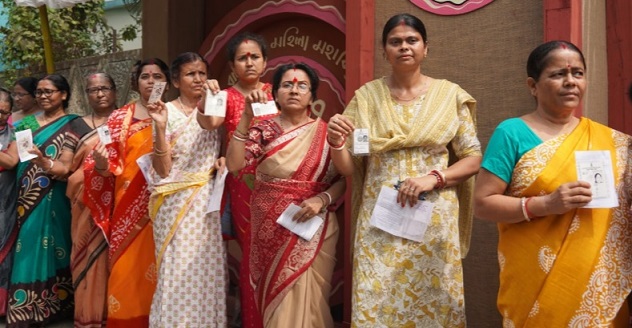
Voting for the first phase of the West Bengal Assembly elections, covering 152 constituencies, was marked by widespread allegations of irregularities, violence, and administrative lapses. Polling began early in the morning across districts in both North and South Bengal, but disruptions at several booths raised concerns about the fairness of the process.
With over 37.7 million eligible voters in this phase, complaints about malfunctioning Electronic Voting Machines (EVMs) surfaced within the first few hours. In districts such as Murshidabad, Malda, and Dakshin Dinajpur, faulty machines delayed polling, leading to long queues and visible frustration among voters.
Political tensions escalated as parties traded accusations. The Trinamool Congress (TMC), led by Mamata Banerjee, alleged that central forces were working in tandem with BJP workers to intimidate voters. The Bharatiya Janata Party (BJP), led nationally by Narendra Modi and Amit Shah, faced accusations of inciting violence in several areas.
On the other hand, BJP leaders claimed that TMC workers were attempting to influence the voting process and were preventing opposition polling agents from entering booths.
The Congress and Left parties, including the CPI(M), also lodged complaints with the Election Commission, alleging that their polling agents were not being allowed to function freely in multiple locations.
In Nandigram, BJP leader Suvendu Adhikari cast his vote, while political activity, including the movement of leaders and localized campaigning, continued in several areas.
Reports of clashes emerged from different parts of the state
ranging from incidents of crude bomb throwing to physical attacks on candidates and party workers. In a particularly alarming incident from Uttar Dinajpur, allegations surfaced that central forces assaulted women at a polling booth.
There were also claims by some voters that pressing a button on the EVM resulted in votes being cast for a particular party. However, the Election Commission dismissed these allegations as “baseless.”
By 11 a.m., voter turnout was reported at around 40%. Yet, a critical question remains: can this election truly be described as “free and fair”?
Key Questions Raised:
Why does violence persist despite the deployment of central forces during elections? Are repeated EVM malfunctions merely technical issues, or is there something more concerning?
If both the ruling party and the central leadership accuse each other, who bears responsibility? Is the Election Commission becoming a passive observer?
By the afternoon, over 200 complaints had reportedly been submitted to the office of the Chief Electoral Officer (CEO). But is merely “seeking reports” enough to safeguard democracy?
West Bengal has always witnessed intense political contests, but the current situation suggests that what should be a democratic festival is increasingly resembling a battleground.
As former Chief Minister Jyoti Basu once said:
“History is made by the people.”
The question now is will the people make history this time, or will history itself remain a question?