Last Updated on November 26, 2026 2:16 pm by INDIAN AWAAZ
AARIB AKHTER / NEW DELHI
The Urdu Development Organization (UDO) has urged the Delhi Government to expedite the reconstitution of the Urdu Academy and announce its governing committee at the earliest, emphasizing the need to revive stalled initiatives aimed at the promotion, preservation, and development of the Urdu language.
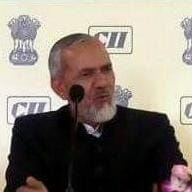
Addressing the issue, UDO National President Dr. Syed Ahmad Khan said that Urdu remains an integral part of Delhi’s cultural, literary, and linguistic heritage and deserves sustained institutional support. He called upon the government to take concrete steps to strengthen Urdu through policy measures and renewed academic and cultural activities.
Highlighting the growing public interest in the language, Dr. Khan pointed to the overwhelming response to Rekhta’s annual literary festival, where large-scale participation and ticket sales reflected the continued popularity of Urdu among people from diverse backgrounds. He said Urdu is not merely a language but a symbol of India’s shared cultural heritage, refinement, harmony, and mutual respect.
“Urdu should not be viewed through the prism of any particular community or religion. It is a shared linguistic and cultural asset of India that belongs to everyone,” he said.
Dr. Khan expressed concern that while the Delhi Government recently announced the reconstitution of committees for five language academies, the Delhi Urdu Academy was not included in the process. Given that Urdu and Punjabi enjoy the status of second official languages in Delhi, he said the omission had caused disappointment within Urdu literary and academic circles.
He noted that the Delhi Urdu Academy has historically been among the country’s most active language institutions, contributing significantly to Urdu literature, publication programmes, literary events, mushairas, and efforts to introduce younger generations to the language.
Describing Urdu as a uniquely Indian language shaped by the interaction of multiple linguistic and cultural traditions, Dr. Khan said its expressive richness, brevity, and poetic elegance have ensured its popularity across different sections of society. From Parliament and legislative assemblies to public gatherings and literary forums, Urdu poetry and idioms continue to be widely used to communicate ideas with grace and impact, he added.
Drawing attention to vacancies in government departments related to Urdu, Dr. Khan also called for the restoration and strengthening of institutional arrangements that previously supported the language. These include the appointment of an Urdu Officer in the Chief Minister’s Office, Urdu editorial services in government publications, and Urdu reporting facilities for proceedings of the Delhi Legislative Assembly.

He urged the government to fill all vacant Urdu-related positions in the Delhi Secretariat and other departments to ensure the language receives its rightful place in administrative and public affairs.
According to Dr. Khan, the promotion of Urdu cannot be achieved solely through occasional cultural programmes. Sustained institutional support, educational opportunities, publishing initiatives, and practical usage of Urdu in government departments are equally important for the language’s long-term growth.
Appealing directly to Chief Minister Rekha Gupta and the Delhi Government, Dr. Khan urged them not to disappoint the large number of people who cherish and promote Urdu. He called for the immediate revival of the Delhi Urdu Academy, the announcement of its new committee, and the filling of all vacant Urdu-related government posts.
“Urdu represents India’s sweetness, cultural richness, and composite heritage. Protecting and promoting it is essential to preserving Delhi’s Ganga-Jamuni culture and strengthening India’s linguistic diversity,” he said.