
Last Updated on October 13, 2026 12:28 am by INDIAN AWAAZ
Our Correspondent / New Delhi
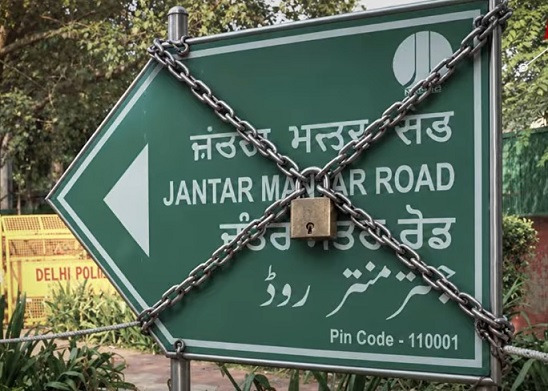
The Centre’s swift decision to shift the designated protest site at Jantar Mantar is being viewed as an attempt to shield Chief Election Commissioner Gyanesh Kumar from an escalating opposition onslaught, raising fresh questions over the government’s handling of dissent and political protests.
In a surprise move, the Centre on Monday denotified Jantar Mantar as a designated protest site, triggering speculation over the timing and political implications of the decision.
Opposition parties, including leaders from the INDIA alliance, have strongly criticized the Centre’s decision to revoke Jantar Mantar’s status as a designated protest venue, raising political concerns over the timing and intent:
The move comes after leaders of INDIA Block and Cockroach Janta Party (CJP) reportedly requested for that site. However, the decision to withdraw Jantar Mantar’s status as a designated protest venue has raised questions about whether the move could restrict the Opposition’s ability to mobilise and publicly voice its grievances.
With Gyanesh Kumar facing mounting political criticism, the timing of the Centre’s decision is likely to intensify the confrontation between the government and opposition parties. Critics may interpret the move as an attempt to reduce the visibility of protests directed at the Election Commission’s leadership.
The Centre is likely to face questions over the reasons behind the sudden decision, particularly whether adequate alternative venues will be made available to ensure that political parties and citizens can exercise their right to peaceful protest.
Burari, Ramlila Maidan and CBD Ground in East Delhi are among the alternative locations being mentioned for designated protests following the move. The shift away from Jantar Mantar, a prominent venue for political demonstrations in the national capital, could alter the visibility and public impact of protests against the government and constitutional authorities.
The key question is whether the decision is purely administrative or carries wider political implications. The Centre’s explanation for the move, along with details of the CJP leaders’ request and the status of the proposed alternative venues, will be crucial in establishing the full circumstances behind the decision.
Supreme Court’s Stance on Jantar Mantar as a Protest Site
The legal framework surrounding Jantar Mantar as a protest venue is anchored in key Supreme Court rulings that balance fundamental rights against public order:
A. Mazdoor Kisan Shakti Sangathan v. Union of India (2018)
- Overturning Blanket Bans: In July 2018, the Supreme Court set aside an order by the National Green Tribunal (NGT) that had imposed a total ban on demonstrations at Jantar Mantar and Boat Club.
- Right to Protest as a Fundamental Right: The apex court held that peaceful assembly and expression of dissent under Article 19(1)(a) and Article 19(1)(b) are foundational to democracy and cannot be completely extinguished.
- The “Golden Rule” / Balancing Principle: The Court declared a “golden rule” requiring authorities to strike a balance between the fundamental rights of protesters to assemble and the rights of local residents and commuters to live peacefully and move freely without undue disruption.
- Regulation over Prohibition: The Supreme Court directed the Delhi Police and local authorities to permit limited and regulated demonstrations at Jantar Mantar rather than enforcing a blanket prohibition.