
Last Updated on December 15, 2025 10:01 pm by INDIAN AWAAZ
By Lalit Gargg
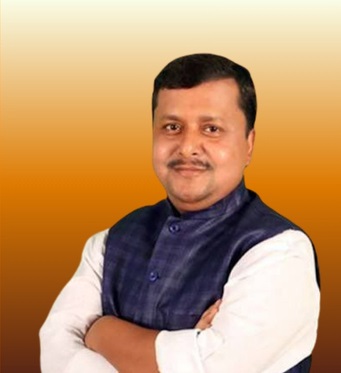
Indian politics has long awaited a decisive generational transition, and that moment now appears to be unfolding. The Bharatiya Janata Party (BJP), the world’s largest political organization, has taken a significant and symbolic step by appointing Nitin Nabin as its Working National President. Though formally described as an interim arrangement, the political messaging and organizational response surrounding this decision strongly suggest that it may pave the way for his eventual elevation as the party’s full-time National President.
This appointment is not merely an internal organizational adjustment. It reflects a deeper transformation in leadership philosophy, political planning, and future vision—both for the BJP and for Indian politics as a whole. The decision of the BJP Parliamentary Board fits squarely into the pattern of bold, unconventional, and forward-looking choices that have characterized Prime Minister Narendra Modi’s leadership over the past decade.
Nitin Nabin is no stranger to active politics. A five-time Member of the Bihar Legislative Assembly, he brings with him an intimate understanding of grassroots political realities. His career reflects a rare balance between organizational discipline and governance experience. Having served as National General Secretary of the Bharatiya Janata Yuva Morcha, he has been closely involved in cadre-building, youth mobilization, and ideological training—areas that form the backbone of the BJP’s organizational strength. What distinguishes Nabin is that his leadership is not confined to rhetoric or symbolic politics. He has demonstrated an ability to build structures, energize workers, and sustain ideological clarity in challenging political environments. These qualities align closely with the BJP’s foundational ethos—where institutions and collective purpose take precedence over individual prominence.
One of the defining features of Prime Minister Modi’s political style has been his consistent trust in new leadership and generational renewal. Whether in ministerial appointments, the selection of chief ministers, or organizational restructuring, Modi has repeatedly signaled that the future must be prepared in the present. Nitin Nabin’s appointment reflects this philosophy in action. This move also sends a larger message: the BJP is not merely focused on winning the next election cycle. Instead, it appears committed to shaping a long-term ideological and organizational leadership framework for the coming two to three decades. For a party seeking sustained relevance among younger voters—particularly first-time voters—this generational recalibration carries strategic importance.
Within the BJP’s internal structure, the post of National President occupies a unique position. It is not just an administrative office but a crucial pivot of ideological balance and organizational coordination. Traditionally, such appointments are made in close consultation with the Rashtriya Swayamsevak Sangh (RSS), whose role in ideological dissemination, cadre development, and social outreach has been integral to the BJP’s political success. Recent electoral experiences have underscored the importance of close alignment between the party organization and the Sangh Parivar. In this context, Nitin Nabin’s appointment clearly reflects deep deliberation and consensus between the BJP leadership and the RSS. It suggests a shared assessment that youthful leadership, grounded in organizational discipline and ideological commitment, is essential for the party’s next phase.
One of the most immediate challenges facing Nitin Nabin will be the upcoming West Bengal elections. For the BJP, West Bengal represents not merely an electoral contest but a broader ideological and cultural battleground. The state tests the party’s capacity to navigate complex social identities, political polarization, and entrenched regional power structures. As Working National President, Nabin’s organizational competence will be closely scrutinized in Bengal. His ability to energize cadres, strengthen booth-level structures, and build public trust will serve as a decisive measure of his leadership effectiveness. Success in West Bengal would significantly consolidate his position and validate the strategic wisdom behind his appointment.
The BJP has long been known for its distinctive decision-making style—where speculation often points in one direction, but the final outcome surprises even seasoned observers. Multiple names may dominate public discourse, yet the eventual choice frequently reflects internal assessments of capability rather than external expectations. Nitin Nabin’s elevation fits this pattern perfectly and effectively brings an end to prolonged speculation over the party presidency. It also reinforces a core principle of the BJP’s organizational culture: positions are earned through performance, not proximity to power.
Nitin Nabin belongs to a generation of Indian political leaders shaped by organizational loyalty, ideological clarity, and sustained public engagement. From student politics to legislative leadership, his journey reflects discipline, perseverance, and national commitment. He is known for maintaining direct communication with grassroots workers, understanding public concerns at a human level, and articulating them effectively in administrative and political forums. His working style demonstrates confidence in youth, a development-oriented outlook, and a preference for transparency. Perhaps the most defining trait of his political career is his consistent emphasis on responsibility over position. This approach has earned him credibility within the organization and respect across generational lines.
Socially, Nitin Nabin hails from the Kayastha community and is the son of senior BJP leader Navin Kishore Sinha, yet his political rise has been driven largely by personal merit and organizational work rather than lineage. Currently serving as Minister for Road Construction in the Bihar government, he represents the Bankipur constituency in Patna. In the 2020 Bihar Assembly elections, he registered a decisive victory with a margin of nearly 84,000 votes, defeating Luv Sinha, son of Shatrughan Sinha, while Pushpam Priya Choudhary also suffered a significant defeat in the same contest. Earlier, in 2017, Nabin had drawn national attention by filing a sedition case against Congress leader Abdul Jalil Mastan, questioning his citizenship after controversial remarks allegedly urging public insult of the Prime Minister’s image.
Beyond individual achievements, the BJP’s strength lies in its identity as a cadre-based political movement, not merely an electoral party. From booth-level volunteers to national leadership, the organization emphasizes participation, discipline, and collective responsibility. Party workers view themselves not as instruments of power but as active partners in nation-building. This culture of trust, ideological commitment, and mutual respect between leadership and cadre remains the BJP’s most enduring asset. It is this organizational DNA that allows the party to adapt, regenerate, and sustain momentum across political cycles.
Viewed in this broader context, Nitin Nabin’s appointment as Working National President is far more than a routine elevation. It represents a strategic signal about the BJP’s future direction—one that prioritizes youth leadership, ideological firmness, organizational discipline, and seamless coordination with the Sangh. If Nitin Nabin succeeds in navigating the complex challenges ahead—particularly in politically demanding regions like West Bengal—he will not only add a new chapter to the BJP’s organizational history but also help redefine the contours of youth leadership in Indian politics. At this juncture, politics transcends the pursuit of power and becomes a reflection of vision, patience, and long-term foresight.