
Last Updated on October 8, 2026 8:36 am by INDIAN AWAAZ
AMN / NEWS DESK
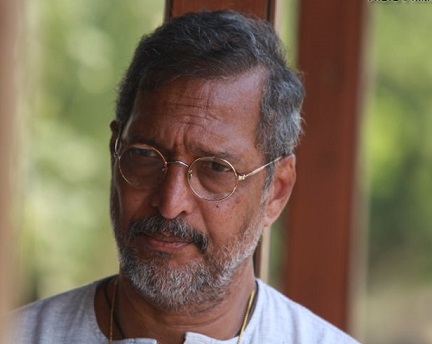
Veteran actor Nana Patekar, one of the most powerful and distinctive performers of Indian cinema, died on Thursday, October 8, at the age of 75 after suffering a severe cardiac arrest at his residence in Goa.
According to reports, Patekar was found unconscious at his home and was rushed to Manipal Hospital, where doctors attempted to revive him for nearly 45 minutes. He was declared dead at around 5.20 am. Dr Shekhar Salkar, Chief of the Oncology Department at Manipal Hospital, confirmed the development to news agencies. A medico-legal case has been registered and a post-mortem examination is expected to establish the precise circumstances of his death.
His son, Malhar Patekar, also confirmed the death, saying that he was travelling to Goa and would issue a detailed statement.
The death of Patekar marks the end of a remarkable career spanning Hindi and Marathi cinema, theatre and filmmaking. Unlike conventional Bollywood stars, he built his reputation not through glamour or a stereotypical leading-man image but through the sheer force of his performances.
From theatre to a formidable screen presence
Born Vishwanath Patekar, Nana Patekar emerged from Maharashtra’s theatre tradition and gradually established himself as one of Indian cinema’s most respected character actors.
His early years were shaped by theatre, where he developed the controlled intensity, distinctive voice and emotional depth that later became his trademark on screen. He entered Hindi cinema in the late 1970s and steadily made his presence felt with performances that were often raw, unconventional and emotionally demanding.
Patekar’s breakthrough came with films that allowed him to portray complicated and often troubled characters. His performance in the 1989 film Parinda became one of the defining moments of his career and earned him the National Film Award for Best Supporting Actor.
He subsequently delivered a series of memorable performances that demonstrated his extraordinary range.
‘Krantiveer’ and the power of his voice
Among his most celebrated films was Krantiveer, in which he played Pratap Narayan Tilak, a disillusioned man who transforms into a crusader against corruption and social injustice.
The film became particularly memorable for Patekar’s fiery dialogue delivery and emotional intensity. His performance earned him the National Film Award for Best Actor and a Filmfare Award.
He later demonstrated that he could move effortlessly between serious cinema and mainstream commercial entertainment.
Films such as Agni Sakshi, Khamoshi: The Musical, Yeshwant, Ab Tak Chhappan, Apaharan and Natsamrat further established his reputation as an actor capable of carrying complex characters.
His portrayal of a tough police officer in Ab Tak Chhappan was particularly praised for its restrained intensity, while his performance in the Marathi film Natsamrat showcased his command over theatre-inspired acting.
Patekar received three National Film Awards during his career and several Filmfare and Maharashtra State Film Awards. In 2013, he was honoured with the Padma Shri for his contribution to cinema and the arts.
From intense drama to comedy
One of the most remarkable aspects of Nana Patekar’s career was his ability to cross the boundaries between serious cinema and popular entertainment.
For a generation of viewers, he became equally memorable as Uday Shetty in the Welcome franchise. His comic timing, distinctive mannerisms and chemistry with Anil Kapoor’s Majnu gave the film a cult following.
The success of Welcome introduced Patekar’s acting to a younger audience and demonstrated that the actor known for intense social dramas could also dominate a broad commercial comedy.
Yet even in lighter roles, Patekar retained the unmistakable personality that had become his signature.
A filmmaker and theatre personality
Patekar was not limited to acting. He also worked as a director and writer and remained closely connected with theatre.
His directorial ventures included Prahaar: The Final Attack, a film that reflected his interest in discipline, social responsibility and the lives of ordinary people.
His relationship with theatre remained important throughout his career. His work in Marathi cinema and theatre earned him a particularly strong following in Maharashtra.
The actor was also known for his relatively simple lifestyle despite decades of success in one of India’s most lucrative film industries. His public persona was markedly different from the conventional image of a Bollywood celebrity.
A career built on character rather than glamour
Patekar’s greatest contribution to Indian cinema was perhaps his ability to make character roles as memorable as lead roles.
He rarely depended on conventional heroism. His characters could be angry, vulnerable, morally conflicted, humorous, violent or deeply compassionate. What united many of them was an unmistakable emotional realism.
His voice became almost an instrument in itself. Whether delivering a fiery monologue, confronting an opponent or portraying a broken man, Patekar had a way of making even a short scene memorable.
That quality helped him remain relevant across generations.
His later work showed that age had done little to diminish his commitment to acting. In 2026, he continued to remain active in films and had recently appeared in O’Romeo, directed by Vishal Bhardwaj. He had also remained in the news for his fitness and continued screen presence.
Nana Patekar belonged to a generation of actors who helped expand the possibilities of Indian cinema beyond the traditional hero-villain formula.