
Last Updated on March 20, 2026 12:12 am by INDIAN AWAAZ
Oil Shock & War Fears Trigger Market Carnage; Sensex Crashes 2,500 Points, Nifty Nears 23,000
Our Correspondent
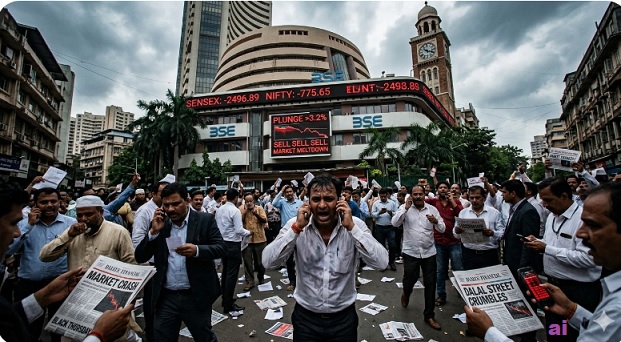
Dalal Street witnessed a dramatic reversal on Thursday as markets plunged sharply, erasing gains from the recent three-day rally. Benchmark indices nosedived over 3%, with the Sensex crashing nearly 2,500 points and the Nifty slipping close to the crucial 23,000 mark, leaving investors rattled.
The selloff was triggered by a perfect storm of factors—aggressive profit booking after the recent surge, a sharp spike in global crude oil prices, and escalating geopolitical tensions in West Asia. Brent crude surged towards the $115–$119 per barrel range, reigniting fears of inflation and macroeconomic instability.
Global cues remained weak, further dampening investor sentiment. Continued selling by foreign institutional investors added pressure, while the US Federal Reserve’s hawkish stance—despite holding interest rates steady—reduced hopes of near-term rate cuts, hurting risk appetite.
Adding to the market turmoil, heavyweight banking stock HDFC Bank saw intense selling after the sudden resignation of its part-time chairman Atanu Chakraborty. The development triggered a broader selloff in financial stocks, amplifying the market’s decline.
The fall was widespread, with all sectoral indices ending in the red. Banking, auto, and consumer durable stocks led the decline, reflecting heightened risk aversion across sectors.
By the close, the Sensex had plunged 2,496.89 points (3.26%) to settle at 74,207.24, while the Nifty dropped 775.65 points (3.26%) to 23,002.15. This sharp correction comes after both indices had gained nearly 3% over the previous three sessions.
Market breadth remained decisively negative, with declining stocks significantly outnumbering gainers. Volatility also surged, with India VIX jumping over 21%, indicating heightened nervousness among investors.
West Asia Conflict Deepens Market Jitters
The ongoing conflict involving Iran has intensified into a full-blown energy crisis, with direct attacks targeting critical oil and gas infrastructure across the region. Key facilities, including Iran’s South Pars gas field and Qatar’s Ras Laffan LNG hub, have reportedly been hit, putting nearly one-fifth of global energy supplies at risk.
With the Strait of Hormuz under threat and supply chains disrupted, global energy markets remain on edge. Oil and gas prices have surged, raising concerns especially for energy-dependent economies.
Tensions escalated further after Israeli leadership hinted at “significant surprises” following recent strikes, while Iran warned of “uncontrollable consequences” that could spiral into a wider global crisis.
Global Markets Mirror the Panic
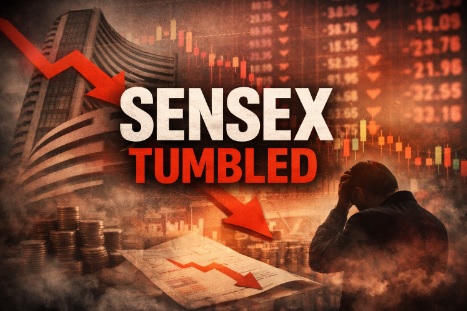
The shockwaves were felt across global markets:
- European indices declined amid rising war concerns
- Asian markets ended in the red, tracking Wall Street losses
- US markets fell sharply, with the Dow hitting a fresh yearly low
- Central banks globally, including the Federal Reserve and Bank of Japan, maintained cautious stances amid rising inflation risks
Key Market Indicators
- Rupee weakened to 92.89 against the US dollar
- Gold prices dropped nearly 4% despite global uncertainty
- US bond yields climbed, signaling tightening financial conditions
- Brent crude surged over 6%, intensifying inflation fears
Stocks in Focus
- HDFC Bank tumbled over 5% after leadership exit
- Larsen & Toubro and ICICI Bank dragged indices lower
- Nazara Technologies slipped after a major acquisition deal
- Zydus Lifesciences and Glenmark Pharma declined despite positive developments
- Mahindra Lifespace bucked the trend with marginal gains
Meanwhile, newly listed Rajputana Stainless debuted at a discount, reflecting weak market sentiment.
Outlook: Volatility Ahead
With geopolitical tensions escalating, crude oil prices rising, and central banks maintaining a cautious stance, markets are expected to remain volatile in the near term. Analysts warn that any further disruption in energy supplies or escalation in conflict could deepen the correction.
Investors are likely to stay cautious, keeping a close watch on global developments, inflation trends, and institutional flows before making fresh bets.