
Last Updated on May 20, 2026 11:12 pm by INDIAN AWAAZ
By Andalib Akhter
In recent past, Saudi Arabia has undergone one of the most closely watched transformations in the contemporary Middle East. Long identified primarily through its oil wealth, conservative social structure and strategic importance in global energy politics, the Kingdom today finds itself at the centre of conversations surrounding economic diversification, technological modernisation, regional diplomacy and ambitious state-led reforms. Much of this transition has been associated with the rise of Mohammed bin Salman, popularly known as MBS, whose leadership has generated admiration, debate and controversy in equal measure across the world.
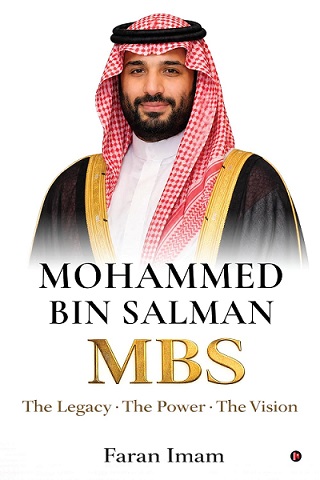
It is within this larger political and economic backdrop that the young author from India, Faran Imam’s new book Mohammed bin Salman — MBS: The Legacy • The Power • The Vision positions itself. The book attempts to examine not only the personality and leadership style of the Saudi Crown Prince, but also the broader transformation taking place within Saudi Arabia under his stewardship. Rather than offering a purely biographical narrative, Imam presents the story of MBS through the lens of governance, economic reform, institutional change and geopolitical ambition.
Stylistically, the book maintains a tone that is broadly supportive of Mohammed bin Salman’s leadership and reform agenda. Readers expecting a sharply critical political biography may find the perspective more favourable than confrontational. However, the author remains consistent and transparent in presenting his central argument — that Mohammed bin Salman represents a transformative figure attempting to redefine Saudi Arabia’s future at a time of significant global transition and regional uncertainty.
One of the book’s strongest sections focuses on Vision 2030 — the ambitious reform and diversification programme spearheaded by MBS to reduce Saudi Arabia’s dependence on oil revenues. Author argues that Vision 2030 is more than an economic policy framework; it represents an attempt to redesign the Kingdom’s institutional and social structure for the demands of the 21st century. The discussion around economic diversification, technological advancement and state modernisation forms the intellectual backbone of the book.
Particularly noteworthy is the analysis of Saudi Arabia’s economic transformation. The book examines large-scale infrastructure projects, tourism expansion, privatisation policies, foreign investment reforms and technological innovation as key pillars of the Kingdom’s emerging economic strategy. Mega projects such as NEOM and urban modernisation initiatives are discussed as symbols of Saudi Arabia’s attempt to reposition itself as a global investment and business destination.
The young author also places Saudi Arabia’s reforms within the broader context of international politics and economics. The book explores how issues such as energy transition, regional security, global capital flows and technological competition have increased Saudi Arabia’s strategic importance. In doing so, it attempts to explain the political thinking and governance philosophy driving the Kingdom’s current transformation.
The writing style remains accessible and straightforward, making the book suitable for both specialists in Middle Eastern affairs and general readers interested in leadership, governance and global economic change. The thematic structure allows readers to move comfortably through discussions on politics, economics, diplomacy and institutional reform.
While readers seeking a sharply critical political study may find the narrative more appreciative than adversarial, the book nevertheless succeeds in stimulating discussion about leadership, state modernisation and the future direction of the Middle East. Its value lies not only in examining the rise of Mohammed bin Salman but also in exploring the wider challenges faced by countries attempting rapid transformation in an evolving global order.
For readers interested in contemporary Saudi Arabia and the changing dynamics of the Middle East, Mohammed bin Salman — MBS: The Legacy • The Power • The Vision offers an informative and thought-provoking overview of one of the most consequential political figures of the present era. Book is available at amazon and flipkart

About Author : Faran Imam is an independent researcher and analyst with a strong interest in Middle Eastern politics, political economy and contemporary governance. His work primarily explores questions of leadership, state transformation, institutional reform and strategic change in the modern Arab world, particularly during periods of rapid political, social and economic transition. Through his research and writing, he seeks to examine how emerging leadership models and policy reforms are reshaping the political and economic landscape of the region.