
Last Updated on August 18, 2026 7:21 pm by INDIAN AWAAZ
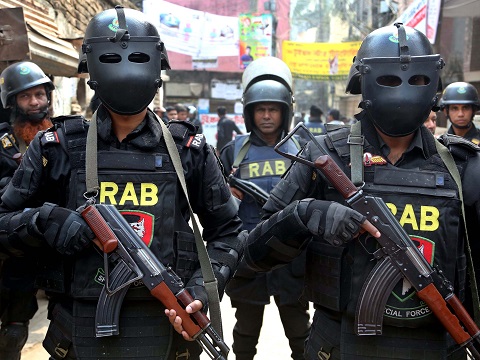
File photo
Zakir Hossain from Dhaka
Bangladesh has taken a major step towards abolishing the Rapid Action Battalion (RAB), its controversial elite security force, with the Cabinet approving a draft law to replace it with a new specialised police unit, the Special Response Battalion (SRB).
The draft Special Response Battalion Act, 2026, was approved at a Cabinet meeting chaired by Prime Minister Tarique Rahman. It will now go through vetting by the Legislative and Parliamentary Affairs Division before the law is finalised.
Under the proposed law, RAB will formally cease to exist and the SRB will operate as a specialised unit under Bangladesh Police. RAB’s personnel, powers, facilities, funds, property, records and other assets will be transferred to the new force.
Existing departmental rules governing RAB will continue, with necessary changes, until separate regulations for the SRB are framed.
A key provision in the proposed law is the creation of a multi-party grievance redress committee to deal with complaints from citizens against the SRB as well as grievances raised by members of the force.
The accountability mechanism is significant given the long-running allegations against RAB over extrajudicial killings, enforced disappearances, torture and other human-rights violations.
RAB was established in 2004 under a BNP-led government as an elite force comprising personnel drawn from different security services. It was tasked with counter-terrorism, tackling militancy, organised crime and serious offences.
While it gained prominence for operations against militant groups and criminal networks, the force also faced mounting criticism over alleged rights abuses.
In December 2021, the United States imposed sanctions on RAB and several serving and former senior officials under its Global Magnitsky programme over allegations of serious human-rights violations, including extrajudicial killings and enforced disappearances.
Demands to abolish or fundamentally restructure RAB intensified after the July-August 2024 uprising that toppled Sheikh Hasina’s government.
A UN human-rights investigation later linked RAB and other Bangladeshi security agencies to serious violations during the unrest and called for structural reforms and greater accountability. Bangladesh’s Commission of Inquiry on Enforced Disappearances also recommended abolishing the force.
International rights organisations, including Human Rights Watch, have similarly called for RAB to be disbanded and for any successor body to operate under independent oversight and stronger accountability mechanisms.
Reform of RAB had been under discussion since late 2024, with earlier proposals focusing on changing its name, organisational structure and legal framework. In April 2025, RAB’s then director general also publicly called for a new law to strengthen accountability.
The Tarique Rahman government has now opted for formal abolition rather than simply renaming the force.
However, because the proposed SRB will inherit much of RAB’s personnel, powers and infrastructure, the success of the overhaul will depend on how effectively the new accountability and oversight provisions are implemented.
The reform is therefore being closely watched as a test of whether Bangladesh can retain an elite force to fight terrorism and serious crime while addressing the human-rights controversies that followed RAB throughout much of its 22-year history.