Last Updated on November 27, 2026 10:10 pm by INDIAN AWAAZ
Vivek Shukla

Great sportspersons transcend national boundaries and become icons for people across the world. Pele, Tendulkar and Bolt Lewis belong to this rare category. They are admired not merely for their sporting achievements but also for the emotions and aspirations they inspire. Sachin Tendulkar, in particular, was never just a batsman walking out to the crease. He was a source of hope, excitement and collective pride for millions. Trinidad and Tobago-based author of Indian descent Clifford Narinesingh’s The Presence of Tendulkar explores this larger dimension of Sachin’s place in public life, offering readers an insight into the man, his achievements and his influence beyond the cricket field.
The title of the book is particularly significant. The word ‘presence’ goes beyond the physical appearance of a celebrated cricketer. It captures the extraordinary manner in which Tendulkar’s name, image and performances became part of the collective imagination of generations. His arrival at the crease could transform the atmosphere in a stadium and bring millions of television viewers to a standstill. For an entire generation of cricket lovers, watching Sachin bat was an experience in itself. Narinesingh recognises that this emotional connection is central to understanding the phenomenon of Tendulkar.
Tendulkar’s journey makes this exploration particularly fascinating. From his early promise as a young cricketer to becoming one of the most celebrated players in the history of the game, he grew up in the public eye. With every passing year, expectations surrounding him became greater. The pressure was enormous, as millions of Indians looked towards him whenever he walked out to bat. Yet, he continued to approach the game with remarkable concentration and professionalism. His career demonstrated that greatness is not achieved through talent alone; it requires years of hard work, patience and the ability to withstand extraordinary pressure.
The book also makes an effort to look beyond uncomplicated admiration. A sporting career cannot consist entirely of glorious performances and memorable victories. There are difficult phases, disappointments, criticism and moments when even the greatest players struggle. Tendulkar was no exception. His greatness does not require us to overlook the less successful periods of his career. On the contrary, understanding how he dealt with setbacks makes his achievements more meaningful. It is this human dimension that makes the story of a sporting icon worth exploring.
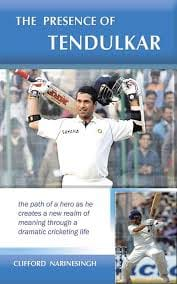
One of the interesting aspects of the book is its attempt to examine Tendulkar from different perspectives. He emerges as a gifted sportsman whose extraordinary natural talent was supported by discipline, commitment and an unending passion for the game. But the author also looks at the public personality that developed alongside his cricketing career. Tendulkar gradually became much more than a successful Indian cricketer. He emerged as a national hero and an internationally recognised sporting figure. His significance, however, cannot be explained through runs, centuries and records alone.
Another important aspect of Tendulkar’s story is his relationship with Indian society. His career unfolded during a period when television transformed the reach of cricket and commercial sponsorship began changing the business of sport. As his popularity increased, he became a familiar presence in Indian households. His performances offered moments of collective excitement in a country divided by languages, regions and social differences. For millions, a Sachin century was an occasion for celebration, irrespective of their background.
His influence was not restricted to India. Cricket followers across the world admired his technique, temperament and extraordinary consistency. Narinesingh, writing from Trinidad and Tobago, brings an interesting international dimension to the subject. His perspective is particularly relevant because the appeal of Tendulkar was never confined to the country whose colours he represented. He became part of the wider sporting culture, earning admiration from people who followed different teams and belonged to different nations.
Writing about an icon of Tendulkar’s stature is not an easy assignment. A great deal has already been written about his life, records and memorable innings. The challenge for any author is to move beyond familiar statistics and tributes and offer readers a fresh perspective. Narinesingh deserves credit for attempting to bring together Tendulkar’s personality, sporting achievements and wider cultural influence. His subject is familiar, but the larger question he raises remains relevant: what makes a sportsperson an enduring public figure?
The book will also interest younger readers who may know Tendulkar primarily through his records and video highlights. They may not have experienced the excitement of watching him bat during the defining years of his career. For them, the book offers an opportunity to understand why his name evokes such strong emotions among cricket followers. Sporting history, after all, is not simply about statistics. It is also about memories, shared experiences and the special bond between a player and the people who watch him.
A book on Tendulkar inevitably raises a larger question: what makes a sporting legend? Is it the number of runs scored, the records broken, the longevity of a career or the ability to inspire millions? In Tendulkar’s case, the answer lies in a combination of all these factors. His records provide measurable evidence of his greatness, but his lasting place in people’s hearts gives that greatness its emotional significance.
The Presence of Tendulkar is a welcome addition to the literature surrounding one of cricket’s most remarkable figures. Clifford Narinesingh has chosen a subject whose appeal extends well beyond the cricket ground. The book will interest devoted cricket followers, readers of sporting biographies and those curious about the making of modern sporting icons. Tendulkar’s greatest achievement may not be captured by any single record or milestone. It lies in the extraordinary presence he created in the lives and memories of millions, a presence that continues long after he has walked away from the crease.