
Last Updated on November 20, 2026 6:59 pm by INDIAN AWAAZ
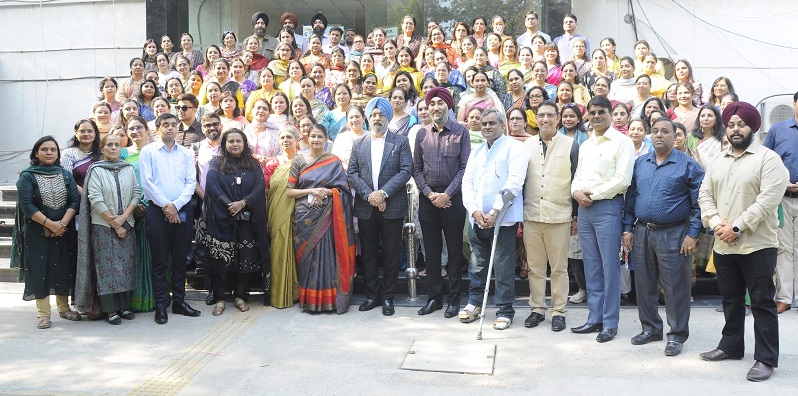
DSGMC President S. Harmeet Singh Kalka Interacts with Faculty and Staff of Mata Sundri College
Staff Reporter / New Delhi
The Delhi Sikh Gurdwara Management Committee (DSGMC) has initiated a consultative exercise to prepare a long-term development roadmap for its educational institutions, with a focus on modernising academic infrastructure, integrating technology into education, strengthening research and expanding opportunities for students.
DSGMC President S. Harmeet Singh Kalka, during an interactive session with the teaching and non-teaching staff of Mata Sundri College for Women, University of Delhi, directed the formation of a five-member committee to consolidate the requirements and suggestions put forward by different departments. He also called for the preparation of a comprehensive 15-year vision document for DSGMC colleges to guide their future growth and development.
The proposed roadmap envisages the creation of an AI-enabled learning and incubation centre, media laboratories, a policy lab, an environmental monitoring centre, digital classrooms and a translation centre dedicated to regional languages and culture. The proposals emerged during discussions with faculty members representing different departments, who highlighted the institution’s achievements as well as areas requiring investment and improvement.
Kalka also proposed closer academic and institutional linkages between Guru Harkrishan Public Schools and Khalsa colleges, with the objective of creating a stronger educational ecosystem and facilitating students’ progression to higher education. The initiative is aimed at strengthening the overall educational framework of DSGMC institutions, with particular emphasis on promoting girls’ education and expanding access to quality learning opportunities.
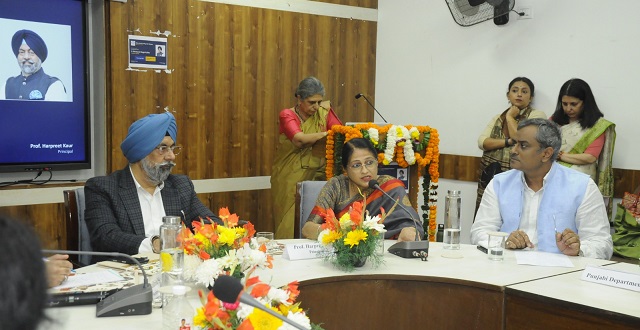
Principal Prof. Harpreet Kaur presented an overview of Mata Sundri College for Women’s journey since its establishment in 1967, highlighting its double-unit Integrated Teacher Education Programme (ITEP), NAAC accreditation and research journal hosted by Delhi University.
She also appreciated Kalka’s initiative to inaugurate the Bhai Mani Singh Ji Archive, which aims to digitise rare material relating to Punjab, Punjabi language and Sikh history, providing students and researchers access to valuable historical resources for academic study.
The principal described Kalka’s direct interaction with college employees and his consultative approach towards institutional development as a distinctive initiative in the history of Sikh educational institutions in Delhi. She welcomed the proposed long-term vision, saying it could help shape a brighter future for Sikh-run educational institutions.
Governing Body member S. Kulbir Singh was also present during the interaction. The programme concluded with a formal vote of thanks.