
Last Updated on November 15, 2026 10:23 pm by INDIAN AWAAZ
Andalib Akhter / New Delhi
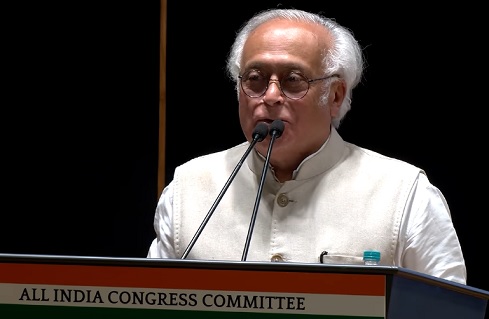
Even as the Congress party has, in recent times, appeared to overlook Maulana Abul Kalam Azad in several of its programmes and commemorative posters, senior party leader Jairam Ramesh has sought to bring the forgotten stalwart back into the party’s political and historical narrative. Speaking at a programme titled ‘Maulana Azad and Today’s India’, organised by the Congress Minority Department at the party headquarters, Ramesh recalled Azad’s immense contribution to the freedom struggle and nation-building, particularly his close political, intellectual and personal association with Jawaharlal Nehru. He also made a pointed appeal for the party to celebrate Azad’s birth anniversary on November 11 every year with the same seriousness and enthusiasm with which it observes Nehru’s birth anniversary on November 14.
His detailed tribute to the freedom fighter, educationist and India’s first Education Minister underlined why the Congress needs to reclaim and prominently project his legacy.
Requesting the organisers to institutionalise an annual programme on November 11, Ramesh said the occasion should be used to familiarise younger generations with Azad’s writings, ideas and contributions to India’s freedom struggle and nation-building. He suggested that meaningful seminars and discussions would be more valuable than large rallies.
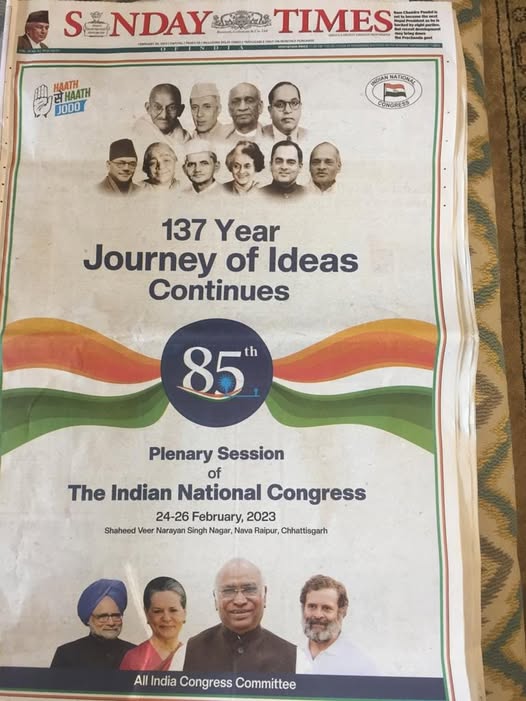
Where is Maulana Azad ?
The central theme of his address was the remarkable personal and intellectual partnership between Nehru and Azad, two leaders born just a year apart — Azad in 1888 and Nehru in 1889. Recalling their first meeting in 1920, Ramesh said their friendship deepened over the years through the freedom struggle, imprisonment and their shared commitment to a pluralistic India.
He highlighted the sacrifices made by both leaders, noting that Nehru spent nine years in prison between 1920 and 1947, while Azad endured nearly 10 years of imprisonment and detention, including house arrest.
Recalling the historic Congress session at Ramgarh in March 1940, when Azad was elected party president, Ramesh described his presidential address as one of the most influential speeches in the Congress’s 140-year history. Delivered in Urdu, the speech was translated into English by Nehru himself.
Ramesh referred to a letter written by Azad to Nehru on March 27, 1940, in which Azad praised the translation for capturing the original meaning and spirit of his address. He said the episode illustrated the intellectual understanding and mutual respect between the two leaders. He also recalled that Sonia Gandhi had drawn upon the ideas expressed in Azad’s Ramgarh address during her 2002 lecture at Oxford University’s Centre for Islamic Studies.
Their association became even closer during their imprisonment at Ahmednagar Fort following the Quit India Movement. While Nehru wrote his celebrated book The Discovery of India, Azad composed Ghubar-e-Khatir. Ramesh cited Nehru’s acknowledgement of Azad’s extraordinary intellectual abilities and scholarship in the preface to his book.
After Independence, Azad became Education Minister in Nehru’s government and held the portfolio continuously from 1947 until his death in 1958. Ramesh described this continuity as evidence of Nehru’s exceptional confidence in Azad. Their relationship, he said, allowed Azad to disagree openly with the Prime Minister, whose decisions could be reconsidered in the light of his advice.
Highlighting Azad’s contribution to institution-building, Ramesh recalled the establishment and development of major educational and cultural institutions during his tenure, including the Indian Institutes of Technology, the University Grants Commission, the Sangeet Natak Akademi and the Lalit Kala Akademi.
He also quoted Nehru’s parliamentary tribute following Azad’s death in February 1958, in which the former Prime Minister described him as a rationalist and modernist who was deeply spiritual but not bound by religious orthodoxy.
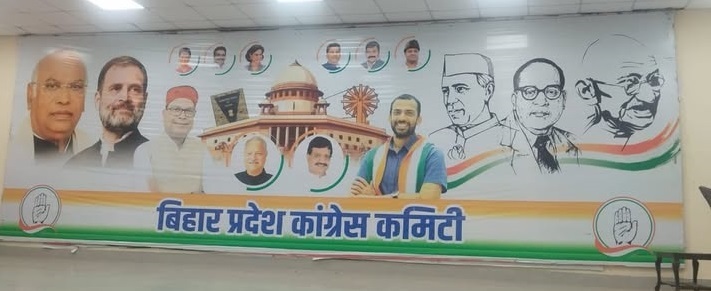
Where is Maulana Azad ?
Ramesh further recalled Azad’s staunch opposition to Partition and his conviction that religion alone could not provide a lasting foundation for nationhood. Azad’s concerns about the contradictions between West and East Pakistan, he said, acquired particular significance with the creation of Bangladesh in 1971.
Concluding his address, Ramesh described Nehru and Azad as symbols of India’s composite heritage, arguing that the country’s diversity must not merely be accepted but respected and celebrated.
He also emphasised Azad’s contribution to the making of the Constitution, describing him, alongside Nehru, Sardar Vallabhbhai Patel and Rajendra Prasad, as one of the four important pillars of the Constituent Assembly.
Ramesh urged the Congress Minority Department to continue organising substantive discussions every November 11, stressing that Maulana Azad’s ideas of secularism, national unity, modern education and communal harmony remain particularly relevant to India’s contemporary political and social climate.