
Last Updated on November 13, 2026 7:19 pm by INDIAN AWAAZ
Over 10 million private security personnel are a vital part of India’s security framework; former Army chief outlines ‘Private Security 2.0’ vision
By Narendra Bhalla / NEW DELHI
Former Army Chief General Upendra Dwivedi has underscored the critical role of the private security sector in strengthening India’s internal security framework, calling for its transformation through modern technology, professional training, improved working conditions and greater social recognition.
Private security personnel are not merely guards deployed to protect commercial establishments and residential complexes but constitute the first line of defence and one of the country’s largest human sensor networks, he said.
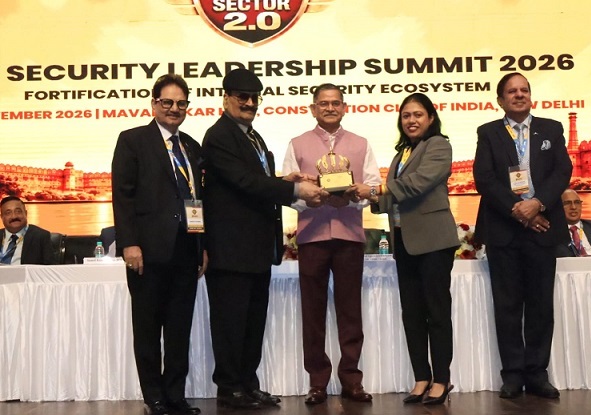
Addressing the inaugural session of the 21st Annual Security Leadership Summit organised by the Central Association of Private Security Industry (CAPSI) at the Constitution Club of India in New Delhi on Friday, General Dwivedi outlined his vision of ‘Private Security 2.0’, identifying three key pillars for the sector’s future: pride, proficiency and partnership.
According to estimates cited by the association, more than 10 million people are employed through over 35,000 private security agencies across the country. The workforce, he noted, is significantly larger than the combined strength of the police and Central Armed Police Forces.
Private security personnel play an important role in safeguarding critical infrastructure, including power plants, coal mines, industrial establishments, hospitals, ports and data centres. Their contribution makes the sector an important component of the country’s wider security architecture, he said.
General Dwivedi stressed that security personnel must receive regular training, skill-based certification and better remuneration. He welcomed initiatives to recognise professional competence acquired through work experience and to develop a more dignified professional identity for security personnel, including the proposed designation of ‘Guarding Officers’.
He also urged private security agencies to ensure that employees receive salaries through banking channels and are provided essential social security benefits, including provident fund, insurance and accident coverage.
Emphasising the need to strengthen operational capabilities, the former Army chief said every security professional should be trained to identify suspicious activities, report potential threats promptly and take appropriate action when required.
Training in first aid, firefighting and disaster management should also become an integral part of their professional preparation. Given the changing nature of security threats, personnel must additionally be equipped to recognise and respond to risks arising from drones and other emerging technologies.
On the growing role of artificial intelligence and advanced technology, General Dwivedi said machines could significantly improve surveillance and information gathering, but the final decision must remain with a trained human being.
He also called for stronger coordination among private security agencies, police forces, fire services, civil defence organisations and ordinary citizens to create a more integrated security response mechanism.
Underscoring the importance of dignity and social recognition, he said respecting security personnel was a collective responsibility of society. His central message was clear: fair wages, serious training and enduring respect.
Speaking at the summit, Director General of Civil Defence and Home Guards Sunil Kumar Jha said Prime Minister Narendra Modi had emphasised the need to make civil defence more vibrant and modern. He said this objective could be achieved more effectively with the active cooperation of the private security sector.
Jha suggested that private security personnel could make a significant contribution to strengthening internal security by voluntarily registering themselves as civil defence volunteers. Such participation, he said, would be an important step towards building a wider and more responsive security network.
CAPSI Chairman Kunwar Vikram Singh said the Central Government had accepted the association’s suggestion to give private security guards a more professional identity by recognising them as ‘Guarding Officers’. The move, he said, would help secure greater social dignity and recognition for the country’s more than 10 million private security personnel.
Singh also announced that an agreement had been reached between CAPSI and the Rashtriya Raksha University in Gujarat. Under the arrangement, private security personnel would receive training in modern security technologies and emerging professional skills at the university.
Former Army Lieutenant General A.B. Shivane, former Additional Secretary in the Union Home Ministry Bhagwan Shankar and former Director General of Police, Gujarat, Anil Pratham also addressed the gathering. They highlighted the growing contribution of the private security industry to national and internal security and emphasised the need to strengthen its professional capabilities and institutional integration.