
Last Updated on October 17, 2026 12:23 am by INDIAN AWAAZ
Abhijeet Dipke, Neha Bora among those detained as protesters wave Tricolour and demand CEC Gyanesh Kumar’s resignation
By Our Correspondent / New Delhi
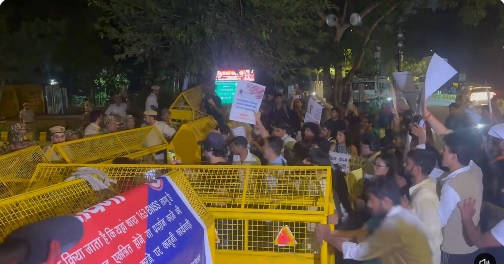
The planned ‘Lehra Do Tiranga’ march called by the Cockroach Janata Party (CJP) at Connaught Place on Friday led to a major security operation in the national capital, with police detaining party founder Abhijeet Dipke, student activist Neha Bora and scores of other protesters.
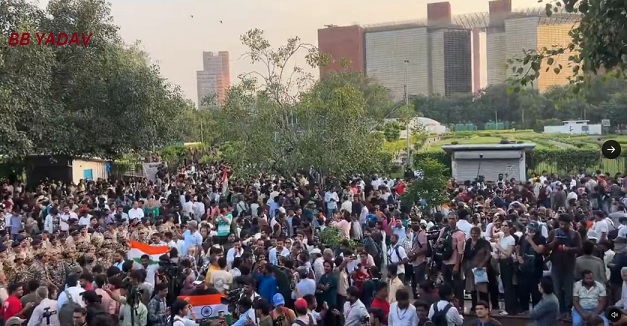
The demonstration, organised around Central Park in Connaught Place, was called amid an intensifying campaign against Chief Election Commissioner Gyanesh Kumar over alleged irregularities in the revision of electoral rolls. Protesters carried the national flag and raised slogans questioning restrictions on demonstrations and demanding accountability from the Election Commission.
Earlier in the day, more than 20 Delhi Police personnel had visited Dipke’s residence and served him a notice directing him to refrain from any action that could prejudice the rights of citizens, traders, commuters, patients and others.
Despite heavy security arrangements and the closure of Central Park, protesters assembled at different locations around Connaught Place. The Indian Express reported that around 2,000 people had gathered in and around the area, while other reports put the number of detainees at approximately 150 by Friday evening.
CJP founder detained before march
Dipke was detained by Delhi Police before he could join the planned demonstration. Police had earlier served him a notice warning against holding the march without lawful permission, citing restrictions on public gatherings, traffic movement and the impact on traders in the busy commercial district.
Neha Bora, president of the All India Students’ Association (AISA), was also detained while attempting to reach Connaught Place with supporters. Separate demonstrations were reported around Mandi House and Firozeshah Road, involving student and Left organisations.
Police and paramilitary personnel were deployed in large numbers across central Delhi, with barricades and restrictions on movement around key locations. By the evening, security personnel had dispersed the gathering.
Protest follows arrests of CJP members
The march was called in support of CJP members Ashutosh Ranka and Saurav Das, who were sent to five days of judicial custody following a demonstration at Jantar Mantar. The arrests came after protesters allegedly crossed barricades and raised the national flag at the site, amid restrictions on gatherings.
CJP has maintained that the national flag was central to its protest and questioned why demonstrators seeking to unfurl the Tricolour were being prevented from doing so. The organisation’s campaign has increasingly focused on the right to peaceful protest and its demand for Kumar’s resignation.
The broader agitation has brought together student groups, activists and opposition supporters who have raised concerns over the Special Intensive Revision (SIR) of electoral rolls. They allege that the exercise has resulted in large-scale voter deletions and could undermine electoral participation.
The Election Commission has rejected allegations of political bias, saying the revision is part of the electoral-roll process and that eligible voters whose names have been omitted can seek enrolment. The ruling BJP has also accused opposition parties of politicising the issue.
Central Park closure adds to confrontation
The New Delhi Municipal Council had announced that Central Park would remain closed on October 16 and 17, citing administrative reasons. The closure came ahead of the proposed march and intensified the dispute over whether the gathering should be permitted at Connaught Place.
The Delhi High Court had declined to restrain the proposed protest, while the Supreme Court declined an urgent hearing on a plea challenging the park’s closure. Police said demonstrations could be held at designated locations, subject to permission and applicable restrictions.
The confrontation comes against the backdrop of changes to Delhi’s protest arrangements, including the withdrawal of Jantar Mantar’s status as a designated protest site and the identification of alternative venues.
The day’s events have renewed debate over how authorities should balance public order, the functioning of commercial areas and the right to peaceful assembly. While police cited legal and public-safety concerns, protesters argued that restrictions were preventing them from expressing dissent.
PHOTO BB YADAV