
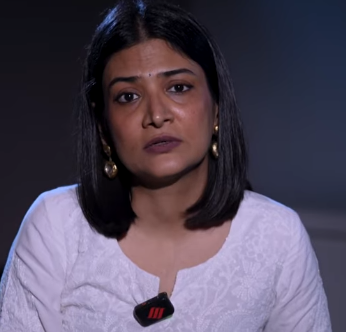
Andalib Akhter
Some journalists chase the noise around power; others quietly follow the trail of facts that lies beneath it. Ritika Chopra has built her career in the latter tradition. Her latest report in The Indian Express on the role and functioning of the Election Commission of India has once again sent ripples through political and media circles, bringing renewed attention to a journalist who has spent years closely examining the country’s political and constitutional institutions.
For those who have followed her work over the years, the attention is less surprising. Chopra has spent nearly two decades reporting from the intersection of politics, governance and public policy, often focusing on institutions and policy decisions that carry significant political consequences.
She would often file her stories from the National Media Centre, where journalists would gather to work, exchange information and follow the day’s developments. Around 2015-16, when she was regularly covering the Education Ministry and Election Commission. What I remember most vividly was her temperament: remarkably calm, focused and almost completely absorbed in her stories. Even amid the bustle of the National Media Centre, She was remarkably calm and concentrated, often immersed in her notes and documents, working quietly on the story she had set out to establish. In a profession where speed and visibility can sometimes dominate, Ritika’s style was noticeably different. She appeared more interested in getting the details right than in being the first person to announce them.
From Kolkata to the corridors of power-
Born in Kolkata, Ritika began her journalism journey with Hindustan Times in 2006 as an intern. She moved to Delhi in 2007 and gradually established herself as a reporter covering politics, governance, social-sector issues and public policy.
Before joining The Indian Express in 2015, she worked with The Economic Times. These experiences gave her exposure to both political reporting and the policy and economic dimensions of government decision-making.
Over the years, her responsibilities expanded considerably. She served as National Education Editor and later as Chief of the National Bureau (Government), positions that placed her at the centre of reporting on the Union government and some of its most important ministries and institutions.
Education was one of her important reporting areas. Her coverage went beyond routine announcements and press briefings to examine the implementation and consequences of government policy.
Her reporting on the Election Commission, however, became another defining strand of her career. Chopra has spent years following this institutional terrain. Her work has examined the functioning of the Election Commission and the issues surrounding electoral administration. That approach earned her the Ramnath Goenka Excellence in Journalism Award in 2021 for her series examining the inner workings of the Election Commission.
In 2018, she received the UNFPA-Laadli Media Award for her report on the Supreme Court verdict upholding Haryana’s law barring illiterate candidates from contesting panchayat elections.
Her coverage during the 2019 Lok Sabha elections earned her the International Press Institute’s India Award for Excellence in Journalism in 2022.
In 2024, she received the prestigious Chameli Devi Jain Award for Outstanding Woman Media Person of the Year, recognising her investigative journalism on issues including lapses in government policymaking, questions surrounding independent institutions and attempts to rewrite aspects of history.
Her latest report on the Election Commission once again demonstrates the value of that approach. It is a significant piece of journalism because it brings a complex and sensitive institutional issue into public discussion through detailed reporting and close attention to facts. For those who have watched Ritika’s journey from the National Media Centre to the national newsroom and now to the editorship in Mumbai, the report is another reminder of the quiet persistence and journalistic rigour that have come to define her work.