
Last Updated on February 28, 2026 12:10 am by INDIAN AWAAZ
ANDALIB AKHTER / NEW DELHI
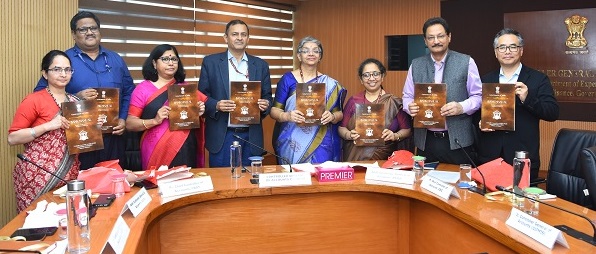
In a major step toward digitizing India’s financial oversight, the Controller General of Accounts (CGA), T.C.A. Kalyani, officially launched two pivotal initiatives on Friday: the Government Bank Dashboard and the Government Bank Manual. These reforms are designed to bring unprecedented transparency and standardization to the banks tasked with handling the Union Government’s vast transaction ecosystem.
The Government Bank Manual introduces a unified operational framework, replacing fragmented practices with clear, standardized procedures for reporting, reconciliation, and compliance. By defining strict service-level requirements, the manual aims to mitigate operational risks and ensure that every bank handling public funds operates under the same rigorous accountability standards.
Complementing this, the Government Bank Dashboard shifts the CGA’s oversight from reactive, “after-the-fact” corrections to proactive, real-time monitoring. This digital tool tracks critical Key Performance Indicators (KPIs)—including remittance timelines, transaction success rates, and scroll compliance—allowing for immediate intervention if performance lags. This data-driven approach ensures that the reconciliation of the Union Government’s cash balances with the Reserve Bank of India (RBI) remains accurate and up-to-the-minute.
CGA T.C.A. Kalyani emphasized that these launches are just the beginning of a broader vision for “institutionalizing shared responsibility” in safeguarding public money. The next phase of these reforms is set to focus on advanced data analytics, deeper digital integration, and heightened cybersecurity protocols to further modernize the nation’s accounting infrastructure.
Beyond consolidating monthly accounts and preparing annual civil appropriation reports, the CGA’s role is critical in maintaining the integrity of Central Civil Accounts Offices. These new tools directly empower that mandate, ensuring that the flow of revenue and expenditure is not just recorded, but managed with world-class efficiency.