
Last Updated on February 6, 2026 3:50 pm by INDIAN AWAAZ
By Devsagar Singh
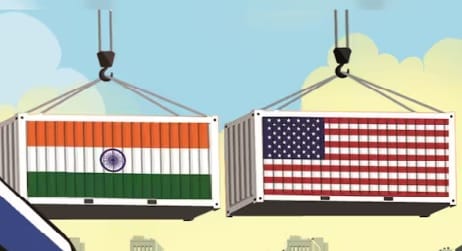
It is not for no reason that Opposition heckles are raised over the much hyped but yet-to-be signed India-US trade deal. Union Commerce minister Piyush Goyal admitted on Thursday Feb 5 that the two countries will sign the ‘first tranch’ of their new trade agreement by mid-March. He sought to justify the 500 billion dollar purchase commitment from the US when the total imports of the country stood at around 750 billion dollars going by the previous year’s figures.
To bolster his points while responding to queries, Goyal reportedly said: “our steel capacity is going to double from today’s 140 million tonnes to about 300 million tonnes in the next few years. And therefore, when we estimated what we will need from the US, we came to a figure of at least 500 billion dollars. We can clearly see before our eyes the potential that we can procure from the US over the next five years.” Goyal also foresaw airplane purchases from Boeing to the tune of 100 billion dollars.
What Goyal did not clarify is the trade in the food and agri sector that India reportedly agreed to , which the US commerce secretary eloquently put as game changer for the US farmers. While there is an assurance from the highest level that the interests of Indian farmers would not be allowed to be jeopardized, there are reasons for concern from on this count. Till the details of the agreement are out, there cannot be any finality over the issue.
Leader of Opposition in Lok Sabha, Rahul Gandhi, has come out strongly against the Government for what he called “compromises” made by the Government putting small and marginal farmers at risk. At a time when the Parliament is in session, the least the Government can do is to take the Opposition in confidence over sensitive issues before signing the agreement. India has resisted pressures over agri trade since WTO came into being, taking into account the sensitivities of poor and marginal farmers. Reports suggest India has agreed to do limited trade on agri and food items. A fair assessment needs to made as regards its impact and ameliorative measures put in place. It should not be done merely to satisfy somebody’s whims, howsoever high and mighty.
Having signed ‘historical’ trade agreements with UK, European Union and others, India has rightly diversified its trade basket. It has its options which it must exercise wisely. India has gone through enough of threats and allurements from the US. President Trump has been more than mercurial in his recent dealings. Capitulating before him may not be in country’s interests.
While the agreement has been announced bringing down tariffs from 50 per cent to 18 per cent making it the best in comparison internationally, India must ensure that any deal signed is not merely politically convenient or symbolically grand, but economically balanced, strategically sound, and socially sustainable. Until everything comes in black and white—and becomes operational—the celebration may be premature.
Devsagar Singh is a senior journalist