

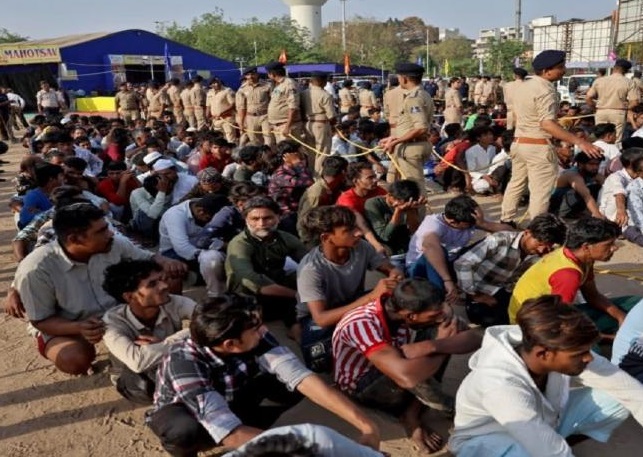
Bengali migrants worker being deported photo social media
Andalib Akhter / New Delhi
At the time when Bengali speaking workers are being harassed in different parts of country, the Economic Survey 2025 presented in the Lok Sabha on Thursday highlited the importance of “Bengali Speaking” migrant workers across the cities and asked the policymakers to frame policy to ensure protection, inclusion and stability of migrant workers.
Survey , recounted recent incident of Gurugram, where it was witnessed a major disruption in essential urban services after a large number of Bengali-speaking migrant sanitation and domestic workers left the city amid fears of law-enforcement action as they were labelled as illegal migrants and Rohingyas.
The sudden departure led to the collapse of door-to-door garbage collection systems across several neighbourhoods, leaving streets and gated communities littered with uncollected waste and raising public health concerns.
The sanitation system, largely operated by informal migrant workers from Bengal and eastern India, broke down almost overnight.
In the absence of trained crews, residents were forced to organise private waste pickup arrangements or hire ad-hoc vehicles at significantly higher costs.
The disruption extended beyond sanitation, with domestic helpers, cooks and other informal service providers also leaving the city. Many households struggled to find replacements, leading to sharp increases in wages and service charges.
CEA in its report highlighted the critical role played by Bengali-speaking and other migrant informal workers in sustaining urban life.
Experts also noted that while informal labour often remains outside official recognition, its absence can quickly paralyse city services, underscoring the need for policies that ensure protection, inclusion and stability for migrant workers in urban centres.