
Last Updated on January 3, 2026 12:31 pm by INDIAN AWAAZ
S N VERMA / NEW DELHI
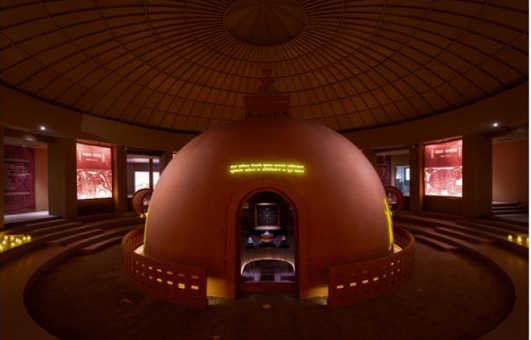
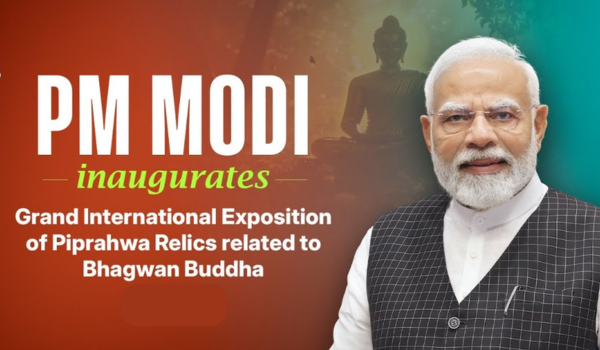
Prime Minister Narendra Modi today inaugurated the Grand International Exposition of Sacred Piprahwa Relics related to Bhagwan Buddha, titled The Light and the Lotus: Relics of the Awakened One, at the Rai Pithora Cultural Complex in New Delhi. The Prime Minister also visited diferent sections of the Exposition related to Lord Buddha.
Discovered in 1898, the Piprahwa relics hold a central place in the archaeological study of early Buddhism. These are among the earliest and most historically significant relic deposits directly connected to Bhagwan Buddha. Archaeological evidence associates the Piprahwa site with ancient Kapilavastu, widely identified as the place where Bhagwan Buddha spent his early life prior to renunciation.
The Exposition brings together, for the first time, the Piprahwa relics repatriated after more than a century from Piprahwa that are preserved in the collections of the National Museum, New Delhi, and the Indian Museum, Kolkata.
The exposition highlights India’s deep and continuing civilizational link with the teachings of Bhagwan Buddha and reflects the Prime Minister’s commitment to preserving India’s rich spiritual and cultural heritage. The recent repatriation of these relics has been achieved through sustained government effort, institutional cooperation and innovative public-private partnership.
The exhibition marks the return of the revered Piprava gem relics of Lord Buddha to Indian soil after a gap of 127 years. For the first time, relics, jeweled remains and archaeological findings unearthed during excavations conducted in 1898 and later between 1971 and 1975 have been brought together under one roof, offering a rare and comprehensive glimpse into Buddhist heritage.
Titled “Light and Lotus: Remains of an Enlightened One,” the exhibition presents a thematic display of antiquities and artefacts drawn from various cultural institutions under the Ministry of Culture. Representing one of the most extensive collections linked to Lord Buddha, the display reflects profound philosophical depth, exceptional craftsmanship and the universal spiritual legacy of Buddhism. More than 80 objects dating from the 6th century BCE to the modern era are on display, including sculptures, manuscripts, thangkas and ritual objects.
This unprecedented cultural event was organised in July 2025 following the successful repatriation of the artefacts through a public-private partnership. The intervention led to the halting of an auction at Sotheby’s Hong Kong, ensuring the relics’ return to India. Notably, this is the first time since the 1898 excavation that all associated relics have been reunited.
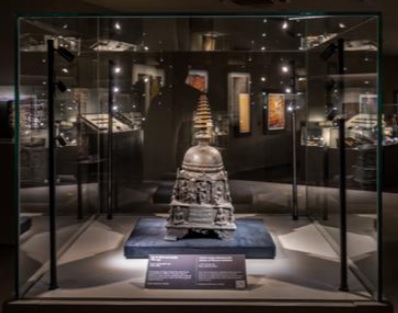
Key highlights of the exhibition include relics and jeweled treasures from the Indian Museum, Kolkata; artefacts recently returned from the Peppe family collection; and the original stone chest in which the gem relics and bone remains were first discovered.
The sacred Buddha relics were originally found by British archaeologist William Claxton Peppe in 1898 at the ancient stupa of Kapilvastu. Following their discovery, the relics were distributed internationally—some gifted to the King of Siam, others taken to England, while a portion remained in the Indian Museum, Kolkata. In 2025, a significant part of the Peppe family collection was brought back to India through decisive action by the Ministry of Culture, supported by Buddhist communities worldwide.
The exhibition reinforces India’s role as the birthplace of Buddhism and highlights the country’s growing stature as a global spiritual and cultural leader. Under Prime Minister Narendra Modi’s leadership, India has intensified efforts to reclaim its civilizational heritage, with 642 antiquities repatriated so far. The return of the Piprava relics stands as a historic milestone in this journey.