
Last Updated on November 22, 2025 7:59 pm by INDIAN AWAAZ
R. Suryamurthy / NEW DELHI
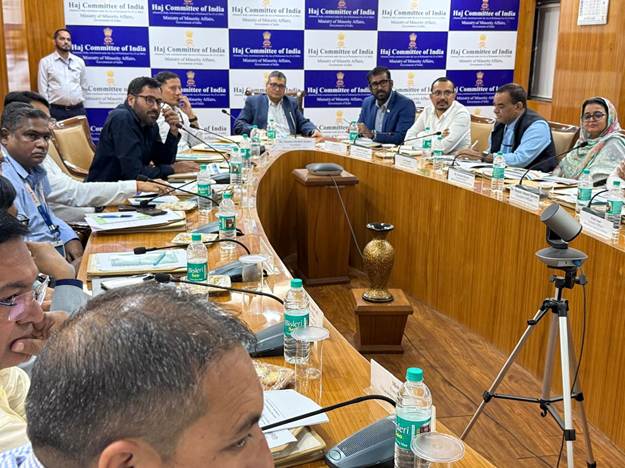
The Haj Committee of India on Saturday held a day-long national conference aimed at tightening its preparedness for Haj 2026, with the Centre directing a full digital transformation of all services and quicker financial settlements for pilgrims.
The meeting, chaired by Minority Affairs Secretary Chandra Shekhar Kumar, began with a two-minute silence for the Indian pilgrims killed in a bus accident in Medina on November 17.
Dr. Kumar asked the Committee to “eliminate manual processes altogether” and shift to a fully portal-based, AI-integrated system that guides pilgrims from the application stage to post-Haj services. The government, he said, expects seamless information access, faster support, and transparent financial transactions as part of the overhaul.
He also ordered the immediate refund of 75% of all pending dues owed to Haj pilgrims, with the remaining 25% to be cleared after verification, due diligence, and audit. To institutionalise financial transparency, the Haj Committee has been told to hire a professional financial management services firm and ensure round-the-clock self-service support for transactions.

HCoI CEO Shanavas C told the Ministry the Committee would undertake all required reforms to make the 2026 pilgrimage “smoother, more efficient, and more pilgrim-friendly” than previous years. Joint Secretary Ram Singh, who recently returned from Saudi Arabia, shared operational feedback on easing processes for Indian pilgrims during transit and stay.
State and Union Territory Haj Committees flagged recurring on-ground challenges, including long travel distances to embarkation points and poor accessibility for elderly and specially-abled pilgrims. Officials said these concerns will be addressed in consultation with states, airports, and other stakeholders.
The Ministry of Minority Affairs said both the government and the Haj Committee remain committed to delivering a safe, well-organised and “pilgrim-centric” Haj experience in 2026, backed by technology, stronger logistics and more accountable financial systems.