
Last Updated on August 28, 2025 9:32 pm by INDIAN AWAAZ
Zakir Hossain in Dhaka
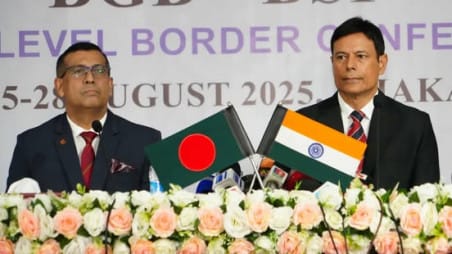
Bangladesh and India have agreed to curb border killings, smuggling and illegal intrusion, ensure repatriation of nationals through legal channels, and stop development work within 150 yards of the zero line, according to a joint statement at the end of the 56th DG-level BSF-BGB talks in Dhaka.
The Indian delegation was led by Border Security Force, Director General Daljit Singh Chawdhary, while the Bangladeshi side was headed by Border Guard Bangladesh Director General Major General Mohammad Ashrafuzzaman Siddiqui.
Both forces emphasized the importance of the Coordinated Border Management Plan in tackling smuggling, human trafficking, illegal intrusion, and terrorism. They agreed to educate border populations, implement socio-economic development in vulnerable areas, and expedite pending infrastructure work near the International Border.
Reaffirming a ‘Zero Tolerance’ stance on terrorism and insurgent activity, both sides committed to continued collaboration, including fencing initiatives and protection of riverbanks, to ensure peace and security along the border.
Both sides agreed on tighter night patrols, real-time info sharing, awareness drives, and socio-economic measures to curb drug, arms, gold and fake currency smuggling, with “zero tolerance” on terrorism.
BGB DG Major General Mohammad Ashrafuzzaman Siddiqui and BSF DG Daljit Singh Chawdhary pledged to “jointly maintain peace and stability along the border.”
Meanwhile Ashrafuzzaman protested “indiscriminate BSF shootings”, saying, “A young Bangladeshi boy was shot dead in broad daylight. How much of a threat could that child really have posed?”
Chawdhary defended his force: “In the first six months of this year, 35 BSF personnel were injured by intruders’ sharp weapons. BSF first issues warnings, then obstructs, and only as a final step opens fire.”
On push-ins, Chawdhary said, “So far, 550 people have been handed over to the BGB, verification is ongoing for 2,400 cases… If anyone is found to be an Indian citizen, they will be accepted immediately.”
The BGB accused India of pushing in both Indian nationals and Rohingya, stressing “adherence to established procedures for repatriation.”
Both sides agreed on tighter night patrols, real-time info sharing, awareness drives, and socio-economic measures to curb drug, arms, gold and fake currency smuggling, with “zero tolerance” on terrorism.
They also pledged to avoid airspace violations, coordinate riverbank protection, expedite the Dahagram–Tin Bigha fibre project, prevent media propaganda, and resolve pillar and demarcation issues along rivers.