
Last Updated on June 5, 2025 9:36 pm by INDIAN AWAAZ
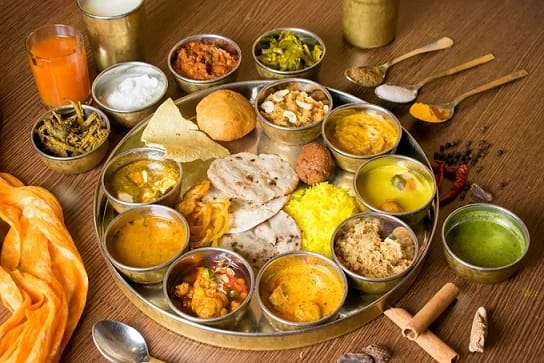
Crisil’s “Roti Rice Rate” indicator, which calculates the average cost of preparing a home-cooked thali across India, tracks the impact of food costs on the common man’s expenditure. It monitors key ingredients including cereals, pulses, broilers, vegetables, spices, edible oil, and cooking gas.
R. Suryamurthy
Indian households are enjoying significantly cheaper home-cooked meals as the cost of both vegetarian and non-vegetarian thalis dropped by 6% year-on-year in May 2025, according to Crisil Intelligence’s latest “Roti Rice Rate” report. This welcome decline is primarily driven by a sharp fall in vegetable prices, particularly for staples like tomatoes, onions, and potatoes.
Tomato prices plummeted by a remarkable 29%, settling at Rs 23 per kilogram compared to Rs 33 in May 2024, a notable reversal from last year’s concerns over yield. Onion and potato prices also saw substantial year-on-year decreases of 15% and 16% respectively. These reductions are a stark contrast to last year’s surges, which were caused by factors such as blight infestations and unseasonal rains for potatoes, and reduced rabi acreage and low water availability for onions.
While vegetable prices provided significant relief, the overall dip in thali costs was somewhat tempered by a 19% year-on-year increase in vegetable oil prices, attributed to higher import duties, and a 6% rise in liquefied petroleum gas (LPG) cylinder prices.
For non-vegetarian meals, the affordability was further boosted by an estimated 6% year-on-year decline in broiler chicken prices. Broiler chicken, which constitutes roughly half the cost of a non-vegetarian thali, became cheaper due to oversupply and reduced demand following reports of bird flu in parts of Maharashtra, Andhra Pradesh, Telangana, and Karnataka.
On a month-on-month basis, the cost of a vegetarian thali remained stable in May 2025, while non-vegetarian thalis saw a 2% reduction. This was influenced by a slight month-on-month increase in potato and tomato prices (3% and 10% respectively), offset by a 10% dip in onion prices for vegetarian meals. A 4% month-on-month decline in broiler prices was the key factor for the reduced cost of non-vegetarian thalis.
Crisil’s “Roti Rice Rate” indicator, which calculates the average cost of preparing a home-cooked thali across India, tracks the impact of food costs on the common man’s expenditure. It monitors key ingredients including cereals, pulses, broilers, vegetables, spices, edible oil, and cooking gas.
Further bolstering the positive economic outlook, economists at Bank of Baroda (BoB) predict India’s inflation to dip below 3% in May 2025, primarily due to this significant moderation in food prices. The BoB Essential Commodities Index (BoB ECI) entered deflationary territory in May 2025, marking its sharpest fall since January 2019, with a 0.6% year-on-year decline. This favourable food outlook, coupled with expectations of an above-normal monsoon, underpins the optimistic inflation forecast. BoB economists anticipate headline CPI to settle at 2.7% in May 2025, potentially offering the Reserve Bank of India (RBI) greater policy flexibility.
A detailed analysis of the BoB ECI reveals that 10 out of 20 commodities experienced deflation. Tomato, Onion, and Potato (TOP) vegetables saw the steepest declines, with retail tomato prices experiencing deflation for five consecutive months. Potato and onion prices declined by 16.3% and 15% respectively year-on-year in May 2025.
Among pulses, most sub-components are witnessing successive periods of deflation, with Masoor dal seeing deflation for the tenth consecutive month. Tur/Arhar dal recorded the maximum year-on-year decline of 18.9% in May 2025, supported by improved production and a 46.3% increase in pulse imports in FY25. Cereal prices also softened, with retail rice falling by 4.5% and atta (wheat flour) moderating to 2.5% in May.
While the year-on-year data is encouraging, sequential trends show some emerging price pressures. The BoB ECI declined by 0.1% month-on-month in May 2025, and by a sharper 0.5% on a seasonally adjusted basis. However, some “crawling back of prices” is visible for tomatoes, with retail prices rising by 9.9% month-on-month in May. Potato prices also increased by 3% after an earlier decline, while onion prices, though still declining sequentially by 3.5%, did so at a softer pace than the 9.8% seen in April. This “TOP trajectory needs to be closely monitored for any reversal,” BoB economists cautioned.
The expected low CPI print for May 2025 provides broader comfort, largely due to easing food inflation and favourable global food and energy prices. The first quarter of FY26 also benefits from a favourable base for inflation prints. Robust arrivals of TOP vegetables (up 26.4% year-on-year in May 2025 compared to a 16.1% decline in May 2024) are supporting price stability. Furthermore, the continued gap between retail and wholesale prices of tomato and potato suggests that lower wholesale prices could soon be passed on to retail consumers. Moderation in international gold prices, which softened by 2.9% month-on-month in May, is also expected to help cap core inflation.
Despite the positive outlook, vigilance is required for certain risks. Upticks in metal prices, particularly aluminum, copper, and zinc, due to frontloading of demand, could exert pressure. While domestic demand remains supportive, a good monsoon and higher Minimum Support Prices (MSP) could also lead to some core inflation.
The most critical factor remains the monsoon’s impact on perishable items. The earlier-than-anticipated arrival and spatial distribution of rainfall need close monitoring, as these items are susceptible to “Cobweb impact on prices.” Notably, some major onion and potato-producing states have already experienced excess or large excess rainfall. This situation necessitates “vigilance…for any weather-related disruption on prices in the coming days.”