
Last Updated on May 31, 2025 6:30 pm by INDIAN AWAAZ
R. Suryamurthy
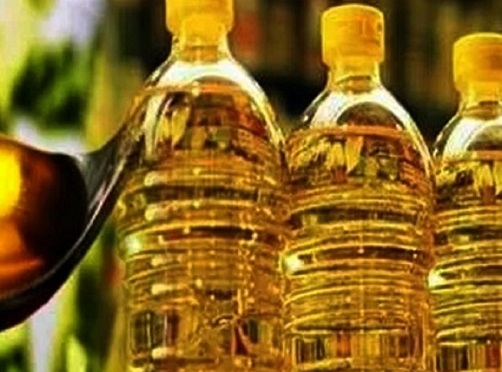
In a significant move to combat persistent inflation in oils and fats and bolster its domestic processing industry, India has drastically cut the basic import tax on crude edible oils by 10 percentage points. The decision, effective immediately, is expected to lower edible oil prices for consumers, stimulate demand, and subsequently increase overseas purchases of palm oil, soyoil, and sunflower oil.
The basic customs duty on crude palm oil, crude soyoil, and crude sunflower oil has been halved from 20 percent to 10 percent, as per a government notification issued by the finance ministry. This reduction will effectively bring down the total import duty on these three crucial oils to 16.5 percent from the previous 27.5 percent, considering India’s Agriculture Infrastructure and Development Cess and Social Welfare Surcharge. The basic customs duty on refined oils, however, remains unchanged at 32.5 percent, with an effective duty of 35.75 percent.
The move comes as India grapples with high inflation in the oils and fats segment. While overall food inflation, as measured by the Consumer Price Index (CPI), dropped to 1.78 percent in April 2025 from 2.69 percent in March 2025, oils and fats, along with fruits, were the only categories to exhibit double-digit inflation in April. India imports over 50 percent of its domestic edible oil requirement, having imported 159.6 lakh tonnes of edible oils valued at Rs 1.32 lakh crore during the 2023-24 oil marketing year.
Industry Cheers “Bold Move” for “Make in India”
The decision has been largely welcomed by key industry bodies. Sudhakar Desai, President of the Indian Vegetable Oil Producers’ Association (IVPA), lauded the government’s move, particularly highlighting the increased duty differential between crude and refined edible oils.
“The decision of the government to reduce the basic import duty on crude edible oil only from 20 percent to 10 percent while leaving the net refined oil duties unchanged at 35.25 percent will increase the duty differential between crude and refined edible oil to 19.25 percent,” Desai stated. He termed it a “significantly bold move towards ensuring Make in India and also protecting the sector from influx of refined oils causing capacity injury to the vegetable oil sector.”
Desai emphasized that this move will not only strengthen the domestic refining capacities of Indian refiners but also ensure fair prices for both oilseed farmers and consumers. The IVPA had persistently advocated for increasing this duty differential to counter the surge in refined oil imports, especially those entering under SAFTA provisions of zero duty, which had previously given neighboring countries a significant advantage. IVPA data shows a sharp rise in refined palm oil imports, from 4.58 lakh MT during June–September 2024 to 8.24 lakh MT (about 30% of total palm oil imports) in the October 2024–February 2025 period.
Sanjeev Asthana, President of the Solvent Extractors’ Association of India (SEA), echoed this sentiment, calling the increase in duty differential “a bold and timely move.” He believes it will discourage imports of refined palmolein and shift demand back to crude palm oil, thereby revitalizing the domestic refining sector and helping to reduce domestic prices for consumers. B.V. Mehta, Executive Director of SEA, noted that refined palm oil imports had risen recently due to being cheaper than crude palm oil.
Concerns Raised by Soybean Processors
However, the move has not been met with universal approval. The Indore-based Soybean Processors Association of India (SOPA) expressed strong reservations, stating that the duty reduction on edible oils is detrimental to local crushing and farmers.
D.N. Pathak, Executive Director of SOPA, called it an “anti-local industry, anti-farmer move,” arguing that it will only benefit the import lobby at the expense of domestic industry and will be a significant setback for India’s goal of self-sufficiency in edible oils. “What made the government to take such a step just a day after increasing MSP is surprising,” SOPA added, referring to the Minimum Support Price.
Import Trends and Global Dynamics
India’s total edible oil imports saw a slight decline of 2.18 percent during the first five months of the oil year 2024-25 (November to October), largely due to a sharp fall in palm oil imports. According to SEA data, India imported 56.39 lakh tonnes of edible oils during November-March of 2024-25, down from 57.65 lakh tonnes in the corresponding period of 2023-24. Palm oil imports, including crude palm oil (CPO) and RBD palmolein, decreased to 24.15 lakh tonnes from 35.29 lakh tonnes.
Conversely, imports of soft oils increased significantly, with soyabean oil imports rising to 19.11 lakh tonnes from 8.82 lakh tonnes in the same period. This shift has altered the share of edible oil imports, with palm oil decreasing to 43 percent from 61 percent, and soft oils increasing to 57 percent from 39 percent.
Globally, the ongoing trade war between China and the US could impact the palm oil market, as palm oil exports to the US will face a 10 percent import tariff, potentially driving US food manufacturers to substitute it with more competitively priced domestic alternatives like soybean oil. However, the US is a relatively small consumer of palm oil, accounting for only about 2.4 percent of global usage.
India primarily imports palm oil from Indonesia and Malaysia. Soyabean oil largely comes from Argentina and Brazil, with some imports from Russia. Russia has also emerged as a significant source of crude sunflower oil for India, alongside Ukraine and Argentina. India also imports non-edible oils such as PFAD and RBD palm stearin for its soap and oleo-chemical industries.