
Last Updated on October 2, 2025 8:19 pm by INDIAN AWAAZ
Dr. Rajatsubhra Mukhopadhyay, Director, Child Health Care, Arambagh, Kolkata,
The incidence of Asthma is on the rise, presenting an expanding field for the practice of respiratory medicine in India. Unfortunately, the management of asthma in the country is suboptimal due to insufficient awareness, misconceptions surrounding inhaler therapy, and the widespread misuse of antibiotics.
Asthma, characterized by airway inflammation and constriction, manifests as wheezing, breathlessness, and coughing. Typically triggered by allergens and irritants, it results in bronchoconstriction and heightened mucus production. This combination of mucus and narrowed airways obstructs airflow, intensifying the challenge of breathing. Additionally, airway hyperresponsiveness causes asthmatic airways to react strongly to various stimuli. The pathophysiology of asthma can be summarized as ABC: airway hyperresponsiveness (A), bronchoconstriction (B), and chronic inflammation (C).
Common asthma symptoms encompass breathlessness, cough, chest tightness, and wheezing. In the pediatric population, chest tightness is often observed after physical activity, while coughing tends to occur in the early morning. Triggers for these symptoms include pollen, dust mites, animal dander, food additives, viral infections, environmental changes, and pollution.
The diagnosis of asthma involves a patient history, physical examination, lung function measurement, and a trial of asthma medication. Key questions during history-taking focus on the frequency of wheezing, breathing issues after physical activity or exposure to allergens, chest tightness or cough after exposure to pollutants, and troublesome nocturnal cough. A family history of asthma, allergies, or frequent colds is also significant.
The breathometer is a diagnostic tool for assessing lung function in asthma. In the bronchodilator reversible test, a bronchodilator is administered, and the peak flow of air in the lungs is measured after an incubation period. An increase of 20% or more from the initial reading indicates a significant degree of reversible airflow obstruction. Overall, the different diagnostic causes that can cause asthma include allergy, allergic bronchitis, atopy, bronchospasm, eosinophilia, pneumonia, cardiac asthma, etc.
Current asthma treatments involve anti-inflammatory drugs, bronchodilators, and anticholinergics, available in various forms such as IV, oral (tablets, syrups), and inhaled (metered dose inhalers, dry powder inhalers, nebulizers). In instances of severe cases, parenteral therapy is employed for its capability to administer high doses rapidly. Nevertheless, its mode of action is indirect, resulting in more pronounced systemic side effects.
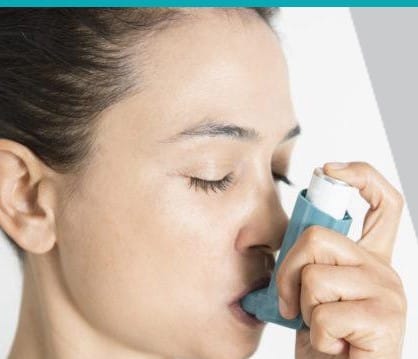
Hence, inhaled therapy is favored in contrast due to its distinct advantages, encompassing lower doses, a swift onset of action, a direct site of action, and minimal systemic side effects. Overall, the primary advantage of inhaled therapy stems from its ability to deliver drugs directly to the airways, ensuring a localized concentration and markedly decreasing the risk of systemic side effects.