
Last Updated on June 2, 2026 12:20 am by INDIAN AWAAZ
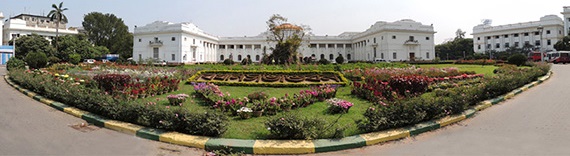
Aafreen Hussain / KOLKATA
The recent decision to restrict journalists’ movement inside the West Bengal Legislative Assembly has triggered a serious debate about press freedom and democratic accountability. Under the new guidelines, reporters and photographers will no longer be allowed to move freely inside the Assembly premises and interact with legislators in corridors, chambers, and common areas. Instead, media personnel will be confined to designated press corners, with access to lawmakers and ministers regulated by the Assembly authorities.
The move has raised an uncomfortable but important question: What happens to democracy when journalists lose direct access to elected representatives?
For decades, regardless of which political party ruled West Bengal, journalists enjoyed considerable freedom inside the Assembly. During the Congress era, reporters could freely enter Assembly premises, approach ministers and MLAs, seek clarifications, and gather information firsthand. The Assembly functioned as a vibrant political arena where spontaneous interactions often led to important stories that informed the public.
The situation remained largely similar during the 34-year Left Front rule. Journalists routinely moved through Assembly corridors, met legislators in their chambers, and engaged in informal conversations that frequently revealed policy differences, administrative concerns, and political developments. While disagreements between governments and the media were not uncommon, access itself was rarely treated as a privilege to be tightly controlled.
Even during much of the Trinamool Congress government’s tenure, media personnel retained the ability to interact directly with lawmakers within the Assembly complex. Reporters could observe political activity, seek reactions, and verify information through personal engagement rather than waiting for officially arranged briefings.
The latest restrictions mark a significant departure from that tradition.
Supporters of the new rules argue that security concerns and administrative efficiency require tighter control over movement within the Assembly. In an era of heightened security awareness, they contend that unrestricted access may no longer be practical.
However, critics ask whether security concerns alone justify limiting journalistic access to public representatives.
If journalists are confined to press corners, how will they gather information beyond official statements? How will they independently verify claims made by ministers or opposition members? Can democracy truly flourish if reporters are forced to rely primarily on controlled interactions rather than direct observation and spontaneous questioning?

The role of the media has long been described as the “Fourth Pillar of Democracy.” This designation reflects the press’s responsibility to hold governments accountable, scrutinize public policy, and provide citizens with accurate and timely information. Journalists perform this function most effectively when they have reasonable access to the institutions and individuals exercising political power.
The concern is not merely about physical movement within a building. It is about whether access to information is becoming increasingly mediated and controlled. When journalists lose opportunities for informal conversations, off-the-record insights, and immediate questioning, the public may ultimately receive a narrower version of political reality.
The debate also highlights a broader challenge facing democratic institutions worldwide: balancing legitimate security requirements with the principles of transparency and accountability.
West Bengal’s Assembly has historically been a place where political leaders, regardless of party affiliation, could be approached by reporters seeking answers. The transition from open access to restricted zones inevitably changes that relationship.
The critical question therefore remains: Is this merely an administrative reform, or does it signal a deeper shift in how political power engages with public scrutiny?
The answer will determine not only the future of journalism inside the Assembly but also the strength of democratic oversight in one of India’s most politically significant states. A democracy is judged not by how comfortably governments govern, but by how freely questions can be asked and answered.
Critics argue that the new restrictions raise concerns that journalists may increasingly be limited to hearing official narratives rather than asking uncomfortable questions. Drawing parallels with Prime Minister Narendra Modi’s “Mann Ki Baat”, opposition voices ask whether the Assembly is moving toward a system where the media is expected to listen, but not question. In a democracy, they contend, the true role of journalism is not merely to receive information but to seek answers, challenge authority, and hold those in power accountable.