
Last Updated on September 12, 2025 10:33 pm by INDIAN AWAAZ
AMN / Kathmandu
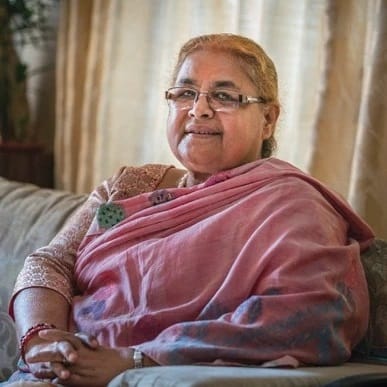
Nepal witnessed a historic political transition on Friday as former Chief Justice Sushila Karki became the country’s first woman to assume the office of Prime Minister, leading an interim government following the resignation of KP Sharma Oli. Oli stepped down amid massive anti-corruption protests spearheaded by Nepal’s Gen-Z movement, which has been demanding greater transparency, accountability, and systemic reforms.
Karki’s appointment comes after rare consensus among Gen-Z protesters, President Ram Chandra Paudel, and Army Chief Ashok Raj Sigdel. According to reports in The Kathmandu Post, her name was endorsed through an online public vote conducted on Discord, where she received the highest number of votes. Protest leaders hailed her as a figure of credibility and independence, capable of guiding the country through a turbulent transition.
Born on June 7, 1952, in Biratnagar, Karki’s career is steeped in legal and democratic activism. She holds a Master’s degree from Banaras Hindu University and a Bachelor of Laws from Tribhuvan University. Beginning her legal practice in 1979, she rose through the ranks to become the first woman Chief Justice of Nepal in July 2016. Her tenure was marked by bold verdicts in high-profile corruption cases and an unwavering stance on judicial independence.
Although appointed under the Nepali Congress quota, Karki’s critics and admirers alike acknowledge that she never bowed to political influence. Her term ended in 2017 after a controversial impeachment motion—widely viewed as politically motivated—was filed against her. Despite this setback, she retained her reputation for integrity and courage.
Karki’s supporters describe her as disciplined and deeply principled, with a Gandhian lifestyle alongside her husband, Durga Subedi, a Congress leader known for his role in the 1973 anti-Panchayat plane hijacking. Former Supreme Court Justice Ananda Mohan Bhattarai praised her courage, calling her “the right person to guide Nepal through this delicate transition.”
As interim Prime Minister, Karki has pledged to restore stability, oversee credible elections, and focus on development. Analysts say her acceptance across generational and political divides reflects both the urgency of Nepal’s crisis and the demand for leaders untainted by corruption.
Senior advocate Bipin Adhikari noted that while Karki brings unmatched integrity, she will require a strong team to navigate challenges. “She has always lived with honesty and courage. Now the nation expects her to demonstrate the same values in governance,” he said.
Karki’s elevation symbolizes not just a political shift but also a generational aspiration for clean politics and democratic renewal in Nepal.