
Last Updated on July 10, 2026 10:59 pm by INDIAN AWAAZ
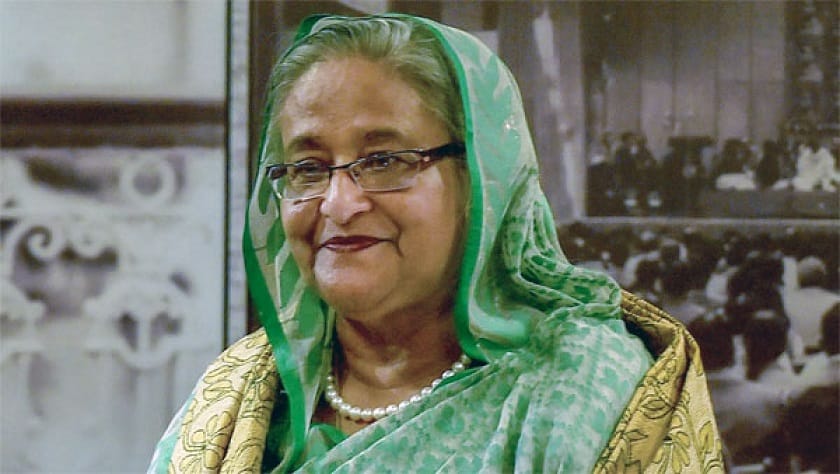
Zakir Hossain from Dhaka
Ousted Bangladesh Prime Minister Sheikh Hasina has said she and several senior Awami League leaders plan to return from exile in India around December and surrender before the courts, despite facing a death sentence in her home country where her party’s activities have been banned.
“They may arrest me on my return, they may even kill me,” the 78-year-old told Reuters in a telephone interview late Thursday. “Still, I have to go.”
“My party leaders and workers are being subjected to tremendous repression. If death comes, I want it to come on my own soil, where my parents are buried and where their blood was shed,” she said.
Hasina fled Bangladesh in 2024 after a student-led mass revolution ended her two-decade rule. In November, the country’s war crimes tribunal sentenced her to death in absentia for allegedly ordering a deadly crackdown on protesters. She has denied the charges.
This is the first time Hasina has announced a timeline for her return, said she intends to surrender, and revealed that other exiled Awami League leaders, including former home minister Asaduzzaman Khan Kamal, who also faces a death sentence, would do the same.
“The authorities in Dhaka want to take me back; they are repeatedly sending letters to India seeking to have me sent back,” she said. “I will go myself.”
She declined to specify the date of her return or the court where she would surrender.
Spokespersons for Bangladesh’s government and India’s foreign ministry did not immediately comment. In April, New Delhi had said it was examining Dhaka’s extradition request and wanted to “engage constructively with the new government and further strengthen bilateral ties”.
The UN has estimated that up to 1,400 people were killed in the crackdown that preceded Hasina’s ouster.
“Cases have been filed against almost all of our leaders and workers, and many of them are in hiding,” Hasina said. “So I said that this time I am returning home, and one day, all of you should come. All together, we will all surrender in court.”
She said she had not held any talks with the Bangladeshi authorities about her return. “Democracy, voting rights, the political rights of the Awami League and justice are not subjects for secret talks.”
Hasina said she was not concerned about imprisonment, noting she had been jailed several times before during campaigns against military rule and by a military-backed caretaker government in 2007 before returning to power in 2008.
Explaining why she fled in 2024, she said her life was under threat as crowds advanced towards her residence.
“When a government works for a long time, mistakes can happen. No government is above error,” she said. “But the right to judge the good and bad, the right and wrong of a government belongs to the people. I leave that judgment to the people.”
Hasina also said she had held online meetings covering 125 of Bangladesh’s 300 parliamentary constituencies to reorganise the Awami League.
“They may have convicted me, and I may not be able to contest elections,” she said. “But why should they suspend the Awami League? If we have done badly, let the people decide.”