
Last Updated on June 11, 2026 2:27 pm by INDIAN AWAAZ
Andalib Akhter / New Delhi
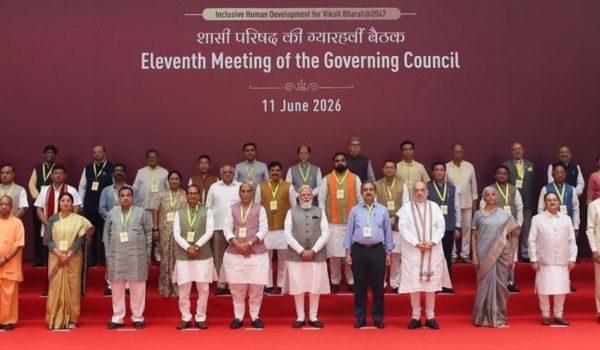
Prime Minister Narendra Modi today emphasized that achieving the vision of Viksit Bharat by 2047 will require coordinated and sustained efforts by both the Centre and the states. Addressing the NITI Aayog Governing Council meeting, he underlined that cooperation, dialogue, and knowledge sharing among states must be strengthened, with NITI Aayog serving as a key platform for collaborative policymaking and implementation.
The Prime Minister identified youth development as a critical priority, calling for greater focus on quality education, industry aligned skill development, and employment generation. He said empowering young people with future ready skills would be essential to driving India’s long term growth ambitions.
Highlighting the opportunities arising from India’s Free Trade Agreements, Modi urged states and MSMEs to enhance competitiveness, adopt international standards, and prepare for greater participation in global markets.
He also reiterated that women led development remains central to the Viksit Bharat agenda, urging states to prioritize women’s education, skill development, safety, and economic empowerment to maximize their contribution to national development.
The meeting focused on developing an implementation roadmap centred on entrepreneurship, job creation, governance reforms, digital public infrastructure, and accountability. Discussions were structured around four key pillars: human capital and future ready skills, productive employment and entrepreneurship, health and well being, and ensuring equity and dignity for all citizens.
The Prime Minister stressed that translating the Viksit Bharat vision into measurable outcomes will depend on effective Centre State partnerships and coordinated action across these priority areas.
The meeting has brought together Chief Ministers and Lieutenant Governors from across the country to discuss the Inclusive Human Development Framework, anchored around four core pillars. These are Foundational Human Capital and Future-Ready Skills; Productive Employment, Entrepreneurship and Decentralised Growth; Health, Nutrition and Well-being; and Equity and Dignity for All.