
Last Updated on September 8, 2026 7:15 pm by INDIAN AWAAZ
Staff Reporter / New Delhi
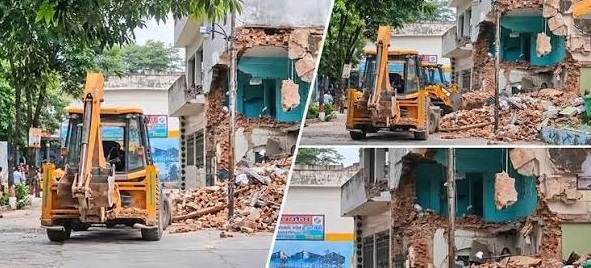
The All India Muslim Personal Law Board (AIMPLB) has strongly condemned the demolition of a more than century-old mosque located within the Saharanpur Collectorate premises, terming the action contrary to the rule of law, religious freedom and basic principles of justice.
AIMPLB spokesperson Dr Syed Qasim Rasool Ilyas said the demolition had raised serious legal and constitutional questions. According to him, the City Magistrate’s Court on July 16, 2026, had declared the mosque to be an unauthorised occupation of government land and ordered its eviction. The mosque management subsequently approached the district court challenging the order.
The district court, however, dismissed the appeal on September 2 and upheld the City Magistrate’s order, Dr Ilyas said. He added that on September 4, the district administration had assured local residents that the mosque would only be sealed. However, according to the Board, the structure was demolished at around 4 a.m. the following morning.
Dr Ilyas argued that an eviction order, by itself, could not automatically justify the immediate demolition of a religious structure. He said that if the mosque management still had a legal right to approach a higher court, demolishing the mosque without providing an effective opportunity to pursue further legal remedies was contrary to the principles of justice and natural justice.
He maintained that even if the government claims ownership of the land, any action concerning the property must comply with law, due process and the principles of natural justice. A claim that the land belongs to the government, he said, does not give the state the authority to act beyond the law.
The AIMPLB spokesperson also invoked Articles 14, 21 and 25 of the Constitution, which respectively guarantee equality before the law, protection of life and personal liberty, and freedom of conscience and religion. He said the demolition therefore warranted close scrutiny from both legal and constitutional perspectives.
Controversy over Ancient Well Discovered at Site
Dr Ilyas further said that following the demolition, an ancient well, reportedly around 20 feet deep, was discovered beneath the debris. The Archaeological Survey of India (ASI), he said, had inspected the site and collected samples.
In view of this development, he stressed the need for an impartial examination of the mosque’s historical status, government records and ownership of the land. He also called for scrutiny of all documents relating to the property and its alleged waqf status.
The Board demanded an independent legal inquiry into the entire process leading to the demolition. It called for the legal basis and orders under which the mosque was demolished to be made public.
It also demanded a comprehensive examination of the mosque’s historical significance, land records and all documents relating to the waqf, besides ensuring that the mosque management is given an effective opportunity to approach a higher court.
The Board further said that if any violation of law is established, action should be taken against the officials responsible.
Dr Ilyas said disputes concerning religious places should be resolved through the law, courts and the Constitution rather than through demolition. “The rule of law requires the state to apply the same legal standards to every citizen and every place of worship,” he said.
The Board expressed hope that the mosque management would take the matter before the higher judiciary and that the courts would examine its legal and constitutional dimensions in depth.
The AIMPLB also said it would extend all possible legal and moral support to the mosque management in pursuing the matter.