
Last Updated on July 9, 2026 7:54 pm by INDIAN AWAAZ
By Our Diplomatic Correspondent
Iran’s Islamic Revolutionary Guard Corps (IRGC) Navy has issued a fresh warning to the United States against any interference in shipping through the Strait of Hormuz, saying any military action in the strategic waterway would invite a “crushing response” from Tehran and risk disrupting the gradual restoration of maritime traffic. The statement was carried by Iran’s state-run Islamic Republic News Agency (IRNA).
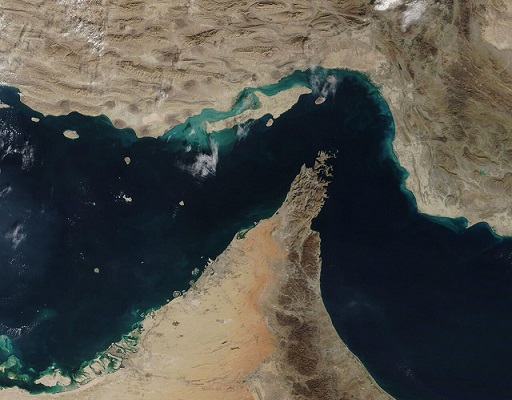
According to the IRGC Navy, the Strait of Hormuz—a vital global energy transit route connecting the Persian Gulf with the Sea of Oman—is operating at nearly 50 per cent of its pre-conflict shipping capacity under Iranian supervision. The force said vessel movement is gradually increasing for ships that receive prior authorization and comply with security procedures laid down by Iranian authorities.
The IRGC accused the United States of attempting to influence navigation through the waterway, describing such actions as “adventurism and interference.” It asserted that “foreigners have no stake in the Strait of Hormuz,” reiterating Iran’s longstanding position that it is responsible for safeguarding security in the strategic maritime corridor, according to IRNA.
The statement further warned that any US military action in or around the Strait would not only trigger a strong Iranian response but could also undermine the ongoing reopening of the shipping lane and adversely affect countries whose economies rely heavily on uninterrupted maritime trade through the route.
The IRGC also referred to recent public ceremonies held in honour of Iran’s Supreme Leader, Ayatollah Seyyed Ali Khamenei, saying the large turnout reflected public resistance to what it described as foreign pressure and “hegemonic powers.” The statement praised Iranian forces, claiming that their response to recent US military actions demonstrated that determination and faith outweighed military hardware.
Earlier on Thursday, Iranian media reported that the IRGC launched missile and drone strikes targeting US military facilities in Kuwait and Bahrain, following what Tehran described as American attacks on multiple locations in Iran’s southern coastal provinces and infrastructure leading to the city of Mashhad. The United States has not immediately responded to the latest Iranian claims.
The Strait of Hormuz remains one of the world’s most strategically important maritime chokepoints, with a significant share of global crude oil and liquefied natural gas exports passing through the narrow waterway. Any escalation in the region is closely watched by global energy markets and shipping operators.
Meanwhile Iranian Foreign Ministry Spokesman Esmaeil Baqaei has issued a sharp rebuke to NATO, demanding that European nations face accountability for their active participation in the US–Israeli military aggression against Iran.
In a strongly worded statement on X early Thursday, Baqaei criticized NATO Secretary-General Mark Rutte’s recent comments, which boasted of European involvement in the conflict.
Rejecting any claims of neutrality, Baqaei emphasized, “Mark Rutte’s repeated admissions of Europe’s willful complicity in the US-Israeli war of aggression against Iran only confirms, once again, that they were not impartial in this brutal unlawful aggression. Those who provided their territories, military bases, and infrastructure to enable the aggression cannot evade responsibility for their contribution to an unprovoked aggression and its grave consequences.”
The spokesperson further lambasted the NATO chief’s rhetoric, characterizing it as a performative display of subservience rather than strategic strength.