
Last Updated on May 3, 2026 11:35 pm by INDIAN AWAAZ
Staff Reporter / New Delhi
India’s drop in the global press freedom rankings came under sharp focus during an event organised on World Press Freedom Day at the Indian Women’s Press Corps (IWPC), with senior journalists and media experts expressing concern over the trend.
As per the latest index released by Reporters Without Borders, India has slipped to 157th position out of 180 countries in 2026. Speakers at the event described the fall as a matter of serious concern for democratic values and media independence.
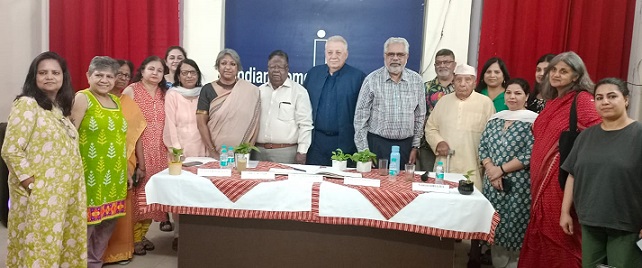
On World Press Freedom Day, the Indian Women’s Press Corps (IWPC) convened a critical panel discussion in New Delhi titled “Safeguarding Press Freedom Amidst Global Upheaval.” The event brought together veteran journalists and media leaders to address the intensifying challenges facing the profession, both within India and on the international stage.
The discussions were framed by a sobering milestone: India’s record-low ranking in the 2026 World Press Freedom Index. Released by Reporters Without Borders (RSF), the index placed India at 157th out of 180 countries—a decline of six positions from the previous year. Panelists characterized this slide as a matter of urgent concern, calling for immediate institutional safeguards to protect the independence of the press.
A central theme of the event was the increasing physical danger faced by reporters. Dr. Waiel Awwad, President of the Foreign Correspondents Club of South Asia, delivered a stern warning that attacks on journalists are no longer incidental. He described them as a “systematic attempt to stop the truth from being told,” pointing to the targeted killings of media professionals in conflict zones like Gaza as a tragic illustration of the risks inherent in modern reporting.
Beyond external threats, the panel explored the internal structural crises eroding the media landscape. Raghavan Srinivasan, General Secretary of the Editors Guild of India, noted that “ownership-driven bias” and editorial pressure have become increasingly normalized. He also highlighted the economic instability of traditional media organizations. With declining audiences and leadership challenges, many outlets struggle with financial sustainability, which in turn compromises their editorial independence. Srinivasan expressed particular worry that younger journalists may find it difficult to uphold foundational journalistic values while operating under such intense economic and political pressures.
Further highlighting internal vulnerabilities, C K Naik, President of the Press Association, argued that the media fraternity has become its own worst enemy due to fragmentation. He lamented the weakening of press bodies and the lack of a coordinated, united resistance against the pressures facing the industry.
In her concluding remarks, IWPC President Sujata Raghavan emphasized that journalism remains central to the democratic ethos. She urged the media community to take collective responsibility for building a more robust environment for the craft. The event concluded with a clear consensus: the survival of free and independent reporting requires a unified effort to protect the safety of journalists and the institutional integrity of the press.