
Last Updated on December 23, 2025 10:30 pm by INDIAN AWAAZ

By Lalit Gargg
Today’s world is passing through deep and multidimensional health crises. On one hand, lifestyle-related diseases, mental stress, depression, anxiety, and imbalance are increasing at an alarming pace; on the other, infectious diseases, pandemics, and environmental disruptions continue to challenge human life relentlessly. In this scenario, it is becoming increasingly evident that global health problems cannot be comprehensively resolved through modern allopathic medicine alone. This is precisely why the attention of the global community is once again turning toward India’s traditional systems of medicine—Ayurveda, Yoga, Unani, Siddha, Homeopathy, Naturopathy, and allied practices—collectively known as AYUSH. These systems emphasize holistic health, natural healing, and the harmony of body and mind, with Ayurveda standing out as one of the most ancient and systematically developed medical traditions, renowned for its philosophical depth and diverse therapeutic methods.
The foundation of these traditional systems is not merely the treatment of disease, but the realization of complete well-being through the integration of body, mind, and soul. Ayurveda focuses on maintaining the balance of the three doshas—Vata, Pitta, and Kapha—and employs diet, lifestyle regulation, herbal medicines, and purification therapies such as Panchakarma. Classical Ayurveda is organized into eight branches: Kayachikitsa (internal medicine), Shalya (surgery), Kaumarbhritya (pediatrics), Bhutavidya (mental health and psychology), Agad Tantra (toxicology), Rasayana (geriatrics and rejuvenation), Vajikarana (reproductive health), and Shalakya (diseases of the eyes, ears, nose, and throat).
Like Ayurveda, Yoga is also a traditional health system that emphasizes the integration of mind and body through physical postures (asanas), breathing techniques (pranayama), meditation, and ethical disciplines. Naturopathy promotes the body’s innate self-healing capacity through natural elements such as earth, water, sunlight, and a disciplined diet. Unani medicine, which came to India from Greece, is based on the balance of four humors—blood, phlegm, yellow bile, and black bile—and recognizes the influence of the environment on human health. Siddha medicine, primarily practiced in South India, emphasizes herbal and mineral formulations along with yoga and meditation. Sowa-Rigpa, often called Tibetan medicine, is practiced in Himalayan regions such as Ladakh and Sikkim and represents a rich mountain-based medical tradition. The Government of India, through the Ministry of AYUSH and the National AYUSH Mission, is actively promoting the development, research, and integration of these systems into mainstream healthcare. Rooted in ancient Indian wisdom, these medical traditions are now establishing a significant presence on the global health platform.
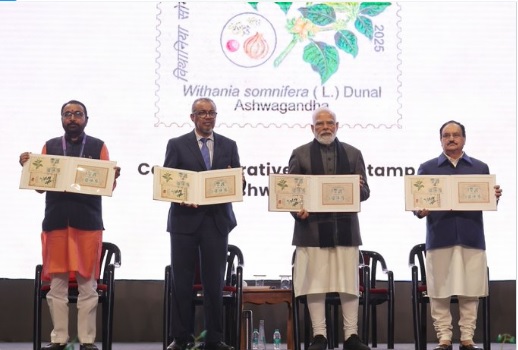
Prime Minister Narendra Modi has played a decisive role in giving India’s traditional medicine global recognition. He has presented it not merely as a cultural heritage, but as an effective, accessible, and sustainable healthcare system for the future. Under his leadership, the establishment of the Ministry of AYUSH, the launch of the International Day of Yoga, partnerships with the World Health Organization on traditional medicine, and the organization of global conferences are concrete steps in this direction. The recent second Global Summit on Traditional Medicine held in New Delhi stands as evidence that India is no longer just a participant in this field, but is emerging as a global guide.
The increase in the export of AYUSH and herbal products during the Prime Minister’s visit to Oman—from USD 61.1 million to USD 65.1 million—is not merely an economic statistic; it reflects growing global trust. Many countries are beginning to realize that India’s traditional medical systems are not only affordable and accessible, but also capable of delivering long-term health benefits. This becomes especially significant when nearly one-fourth of the world’s population remains deprived of basic healthcare facilities due to economic constraints. In such circumstances, traditional medicine emerges as a practical and humane alternative.
According to the World Health Organization, even today between 40 and 90 percent of the population in nearly 170 countries uses some form of traditional medicine. This figure dispels the notion that traditional medicine is confined only to developing nations. In fact, interest in yoga, Ayurvedic therapies, herbal medicines, and naturopathy is steadily increasing in developed countries as well. One major reason is the side effects of modern medicine, excessive dependence on pharmaceuticals, and the high cost of advanced treatments. While allopathic medicine has achieved remarkable success in emergency care and surgery, it is also associated with drug-related side effects, antibiotic resistance, and long-term complications. In contrast, Indian traditional medicine seeks to address disease at its roots. Ayurveda emphasizes individual constitution, balance of doshas, and lifestyle correction. Yoga is not merely physical exercise, but a path to mental peace, concentration, and inner harmony. These systems do not aim to suppress disease, but to awaken the body’s natural healing power. This is why they are widely regarded as safer, less invasive, and more suitable for long-term health.
At the second Global Summit on Traditional Medicine, India effectively presented this vision to the world. Bilateral meetings with sixteen countries—including Brazil, the United Arab Emirates, Malaysia, Mexico, Nepal, and Sri Lanka—made it clear that traditional medicine has now become a powerful instrument of diplomacy and global cooperation. On this occasion, Prime Minister Modi’s launch of the ‘AYUSH Mark’ was a historic initiative, aimed at establishing global quality standards for AYUSH products and services. This will not only strengthen consumer confidence but also enhance the international acceptance of Indian products.
However, it is equally true that the field of traditional medicine faces certain challenges. Issues of quality control, standardization, scientific validation, and credibility have long been raised. Unsubstantiated claims and adulterated products sometimes undermine the credibility of the entire system. Yet, initiatives like the AYUSH Mark and the promotion of rigorous scientific research can effectively address these concerns. What is needed is a strong bridge between traditional knowledge and modern science, so that the best of both can be harmoniously integrated. At a time when a large segment of the global population—nearly 4.6 billion people—lacks adequate access to healthcare services, India’s traditional medical systems can emerge as a ray of hope. They not only aid in treatment but also play a vital role in prevention and health promotion. Through balanced nutrition, regular yoga practice, natural medicines, and mental discipline, many diseases can be controlled at an early stage.
In this context, Prime Minister Narendra Modi’s vision can rightly be described as farsighted. He has viewed traditional medicine not as a relic of the past, but as a necessity of the future. His efforts to establish India’s medical heritage on global platforms signal that India’s role in shaping the world’s healthcare systems will become even stronger in the years to come. As the limitations of modern medicine become increasingly apparent and the world searches for a holistic, accessible, and humane health model, India’s traditional medicine is emerging as a powerful and viable option—not only for India, but for all of humanity. This is its greatest achievement and its most promising future.