
Last Updated on September 18, 2025 6:21 pm by INDIAN AWAAZ
R. Suryamurthy
India’s Chief Economic Adviser V. Anantha Nageswaran on Thursday said he expected the tariff standoff with the United States to be resolved within the next two months, signalling relief for exporters hit by Washington’s steep duty hikes.
Speaking at an event hosted by the Bharat Chamber of Commerce in Kolkata, Nageswaran said discussions between the two governments were progressing. “My hunch is that in the next eight to ten weeks, we will likely see a solution to the penal tariff imposed by the U.S. on Indian goods,” he told industry leaders.
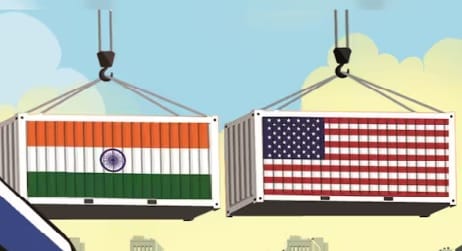
The United States in August slapped an additional 25% levy on Indian exports, effectively doubling tariffs on many goods to as high as 50%. Washington’s action, widely seen as retaliation for New Delhi’s continued purchases of Russian crude, has already dented trade. Indian exports to the U.S. slid to $6.86 billion in August from $8.01 billion in July, while overall merchandise exports fell to a nine-month low of $35.1 billion.
Nageswaran suggested the outcome of negotiations could also include a moderation in reciprocal duties. “It may be the case that the reciprocal tariff may come down to the level which we were earlier anticipating, somewhere between 10-15%,” he said.
A partial rollback could ease pressure on labour-intensive sectors such as apparel, gems, jewellery and seafood, which depend heavily on the U.S. market. According to the Global Trade Research Initiative, India’s exports to the U.S. have fallen for three consecutive months, with August posting the sharpest monthly drop of the year.
The U.S. Customs order imposing 50% duties carved out exemptions for some categories, including iron and steel products, aluminium, copper, and passenger vehicles. Roughly a third of Indian exports to America remain duty-free. But industry groups warn that prolonged higher tariffs could cost India as much as $30–35 billion in lost exports by 2026 if no deal is reached.
Nageswaran expressed confidence that the penal duties would be withdrawn after November 30. “Geopolitical circumstances may have led to the second 25% tariff, but considering recent developments, I do believe the penal tariff will not be there after November 30,” he said.
The U.S. accounts for nearly one-fifth of India’s exports. A breakthrough in the talks would restore stability to a key trade partnership strained by sanctions policy and shifting geopolitics.