
Last Updated on October 24, 2025 11:22 pm by INDIAN AWAAZ
Cloud Seeding Operation Scheduled Between October 28 and 30
Staff Reporter / New Delhi
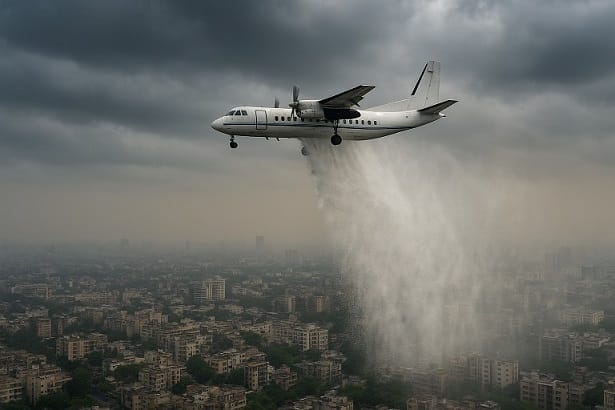
In a first-of-its-kind experiment to combat rising air pollution, Delhi is all set to conduct artificial rain through cloud seeding between October 28 and 30. The initiative aims to bring temporary relief from hazardous smog levels that have plagued the National Capital Region (NCR) every winter due to vehicular emissions, stubble burning, and industrial pollution.
Chief Minister Rekha Gupta announced that all technical and logistical arrangements have been finalized. “This is a significant milestone for Delhi’s environmental management. Artificial rainfall will help settle airborne pollutants and improve the Air Quality Index (AQI) substantially,” she said. The Chief Minister added that the experiment is part of a larger plan to integrate advanced weather-modification technologies in Delhi’s long-term pollution control strategy.
Environment Minister Manjinder Singh Sirsa confirmed that aircraft, chemical dispersal systems, and meteorological coordination are fully ready. “Our teams, in collaboration with scientists from IIT Kanpur and the Indian Meteorological Department (IMD), will monitor the process in real-time. The aim is to create localized rainfall by introducing silver iodide and sodium chloride particles into pre-existing clouds,” Sirsa explained.
Officials said that the government has been studying the feasibility of cloud seeding for months and carried out several simulation tests. If successful, this will mark the first-ever artificial rainfall in India’s capital, setting a precedent for other metropolitan regions facing severe air quality crises.
According to environmental experts, artificial rain can temporarily reduce particulate matter (PM2.5 and PM10) levels by up to 25–30%. However, they cautioned that this should not be seen as a permanent solution. “While it can help dilute pollutants, the root causes—such as emissions, waste burning, and vehicular congestion—must still be addressed,” said Dr. Anita Sharma, an air quality specialist.
The Delhi government has also deployed additional measures, including the odd-even traffic plan, construction dust control, and green buffer zones, to complement the artificial rain experiment. If the operation succeeds, it may be replicated in highly polluted districts of Haryana and Uttar Pradesh during the coming months.