
Last Updated on September 9, 2025 8:17 pm by INDIAN AWAAZ
Andalib Akhter / New Delhi
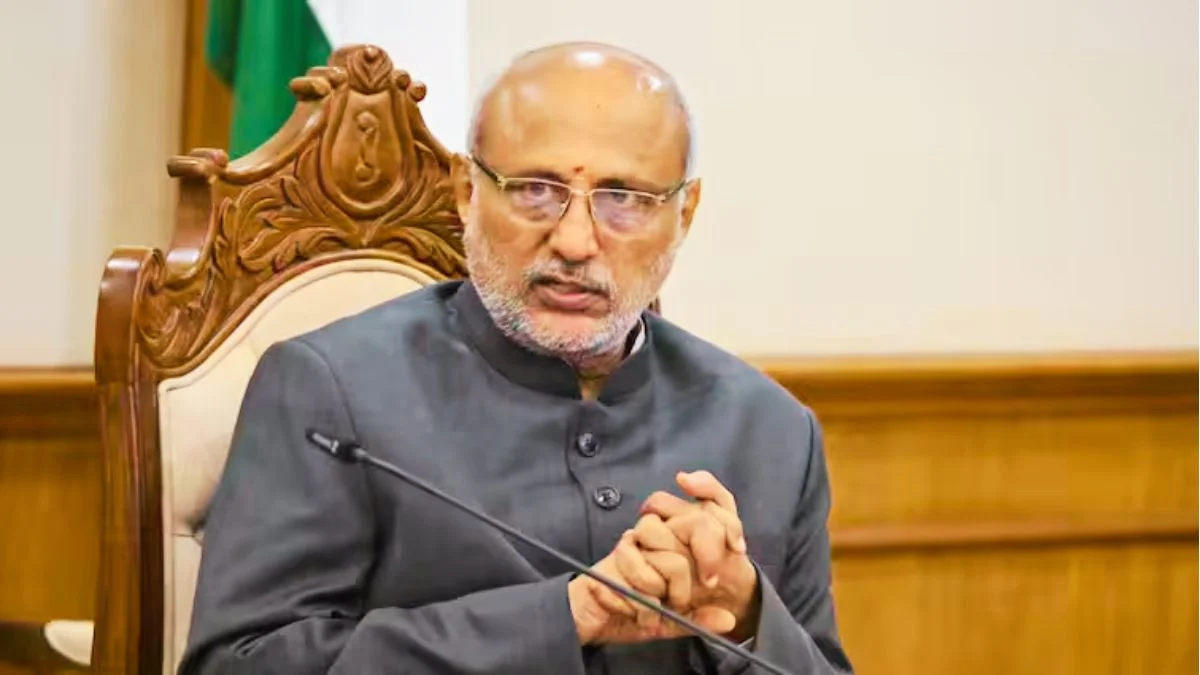
National Democratic Alliance (NDA) nominee CP Radhakrishnan has been elected as the 15th Vice President of India, securing a decisive victory over B. Sudershan Reddy, the Opposition INDIA bloc’s candidate and a former Supreme Court judge.
The Results
Radhakrishnan, the NDA-backed candidate, polled 452 votes, while his rival Sudershan Reddy secured 300 votes. Returning Officer PC Mody, Secretary-General of the Rajya Sabha, formally declared Radhakrishnan the winner, noting that the result will be communicated to the Election Commission of India.
The electoral college for the Vice Presidential election comprised 781 members from both Houses of Parliament—the Lok Sabha and the Rajya Sabha. Voting began at 10 am and concluded at 5 pm, with MPs from across party lines exercising their mandate. According to Congress sources, around 315 opposition MPs participated in the voting process.
Candidate Profiles
The NDA had announced CP Radhakrishnan as its Vice Presidential candidate on August 17. Radhakrishnan, a veteran BJP leader and the sitting Governor of Maharashtra, belongs to the Goundar-Kongu Vellalar community, classified under the OBC category in Tamil Nadu. Known for his low-profile but efficient political style, he has also served as BJP Tamil Nadu president and represented Coimbatore in the Lok Sabha twice. His nomination was seen as part of the NDA’s strategy to strengthen its outreach among OBCs and southern states.
Opposing him was B. Sudershan Reddy, a respected jurist and former Supreme Court judge from Telangana. His candidature was projected by the INDIA bloc as symbolic of their effort to rally behind individuals of high constitutional standing.
Political Context
Radhakrishnan’s victory consolidates the NDA’s influence in the top constitutional offices of the country. With Jagdeep Dhankhar already serving as the Chairman of the Rajya Sabha in his capacity as Vice President since 2022, Radhakrishnan’s election continues the NDA’s dominance, particularly in Parliament’s Upper House.
Observers noted that Radhakrishnan’s candidature also reflects the ruling coalition’s southern strategy, particularly targeting Tamil Nadu and other Dravidian heartlands where the BJP has been struggling to expand its base. His OBC background further aligns with the NDA’s emphasis on social justice and representation of marginalized communities.
For the Opposition INDIA bloc, the election was more of a symbolic battle. Though Sudershan Reddy’s legal background and reputation earned respect, the bloc lacked the numerical strength in Parliament to pose a real challenge. Analysts suggest that despite losing, the INDIA alliance aimed to project unity and uphold democratic contestation.
As Vice President, CP Radhakrishnan will also serve as the Chairman of the Rajya Sabha, where his experience as a parliamentarian will be crucial. With the government’s reform agenda and the INDIA bloc’s sharper opposition expected to intensify in the coming sessions, Radhakrishnan’s ability to maintain decorum and navigate debates will be closely watched.
His election underscores the NDA’s continuing grip on constitutional positions and highlights the changing caste and regional equations shaping Indian politics.