

Oli steps down after 19 protesters were killed and hundreds injured during nationwide demonstrations on Monday against corruption and misrule.
AMN / KATHMANDU
NEPAL Prime Minister KP Sharma Oli finally resigned from his post on Tuesday, his secretariat confirmed.The announcement came after protesters vandalised several vital offices including the Parliament building, residences of leaders and protests spread across other cities, continuing demonstrations that began after Monday’s crackdown on the Gen Z protests.
At least 19 protesters, including students, were killed and more than 400 youths injured on Monday when police opened fire on demonstrators demanding an end to corruption and systemic failures.
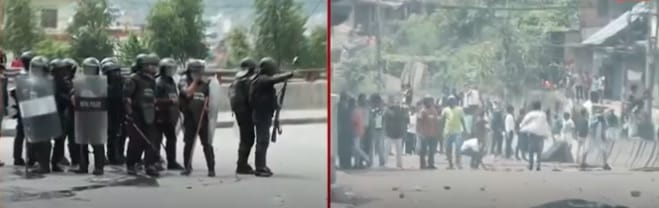
Oli, who was serving his fourth term as prime minister since July 2024 with the backing of the Nepali Congress, had increasingly faced pressure following the bloodshed. Protesters and rights groups had blamed his administration for authorising lethal force against unarmed demonstrators.
His resignation marks the end of a political career that saw him hold office in 2015–16, 2018–21, briefly in 2021, and again from July 2024 until his exit on Tuesday.
Known for his assertive style and nationalist policies, Oli had come to power on promises of stability and prosperity but left amid mounting unrest and accusations of authoritarianism.
Protests continued on Tuesday in Kathmandu and across the country, with demonstrators vowing to push ahead until systemic reforms and accountability are ensured.
The roadmap of a new Nepal under Balen Shah
After the brutalities of the past few days, the country must be guided on the path to peace, dialogue, and cooperation.
KATHMANDU POST
The country is forever bidding farewell to the old guard of Nepali politics, those who treated the country as their private property and people as their servants. At every turn of history, there is a new generation that leads change. Today, the leadership of Nepal’s change is again emerging from among the people, as befits a democratic society.
Yesterday, the old guard’s Prime Minister KP Sharma Oli ordered the brutal killing of young protesters who hit the streets with aspirations of change. Today, after witnessing a complete downfall of the government he fashioned, Oli has hastily resigned. In any case, not only Oli — his old allies Sher Bahadur Deuba or Pushpa Kamal Dahal or anyone else of the old generation — is no more a stakeholder of a new Nepal.
They will forever be remembered as those who exploited the hopes and dreams of Nepali people. Their crimes were not limited to looting the country. After the innocent youth who came to the streets demanding good governance and fighting against corruption were shot dead, Nepali society did not just watch on in silence. The country that witnessed Monday’s brutal atrocities has risen today in favour of change. Millions of people have taken to the streets, and demonstrations are happening nationwide.
Every movement has a purpose and a destination. To guide the country on a new path in line with people’s aspirations, new plans, a definite vision and leadership are immediately needed. To honour the ultimate sacrifice of the youth and the resolve of Nepali society, there must be interventionist change under a new leadership. For that, Nepali society does not have the luxury of waiting and calculating. The people who are leading today’s agitation are clearly saying, ‘Come Balen, save us from this crisis.’ Just as the leadership chosen by the contemporary movement was established after the changes of 1990 and 2006, today’s movement must also choose its own leader.
The movement has swept away old ways of doing things. After the brutalities of the past few days, the country must be guided on the path to peace, dialogue, and cooperation. Such a roadmap should ensure the security of citizens’ lives and that the state does not use force against citizens. The leadership taking immediate command must take the country on the path of new elections through a new transitional government. For that, Balen, as the leader of the new generation, must take an immediate, decisive step. The country’s constitutional mechanisms, security agencies, opposition parties, and the general Nepali people, in turn, must support the youth’s demand and his leadership.