
Last Updated on December 22, 2025 11:55 pm by INDIAN AWAAZ
Staff Reporter / New Delhi
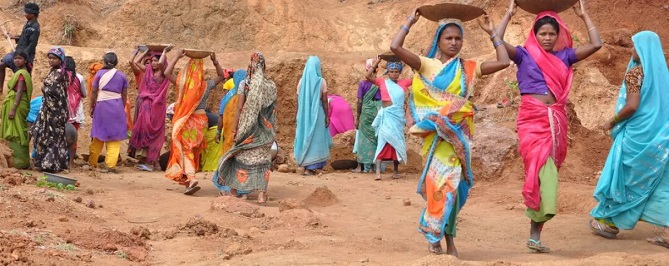
The Centre’s claim of providing a 125-day employment guarantee under the V RAM J Act, 2025—officially named the Viksit Bharat–Guarantee for Rozgar and Ajeevika Mission (Gramin)—has come under scrutiny, with experts questioning its practicality and intent. The new legislation replaces the Mahatma Gandhi National Rural Employment Guarantee Act (MNREGA).
Employment data from recent years suggest that the promise may be difficult to achieve. On average, rural households have received only about 50 days of work annually, significantly lower than the assured 125 days.
Further concerns arise from provisions within the Act itself. The legislation specifies that 60 days of work carried out during the agricultural season will not be counted as labour under the V RAM J Act, effectively limiting the scope of guaranteed employment.
Official figures reinforce these apprehensions. During the last financial year, the average employment generated per household stood at 50.24 days. In the current financial year, the average has declined to 36.15 days, raising questions over the government’s ability to deliver enhanced employment opportunities under the new framework.
Experts warn that the discrepancy between the government’s assurances and ground realities could adversely impact rural livelihoods, particularly at a time when employment security remains a pressing issue.