
Last Updated on August 10, 2026 10:54 pm by INDIAN AWAAZ
Indian envoy says all issues can be resolved through talks
Zakir Hossain from Dhaka
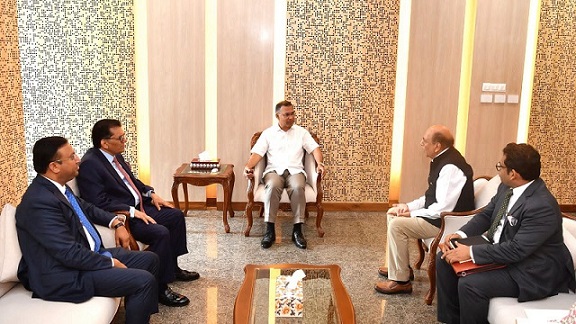
Bangladesh on Monday urged India to expedite the extradition of ousted prime minister Sheikh Hasina, making the issue a key point of discussion during Indian High Commissioner Dinesh Trivedi’s first meeting with Prime Minister Tarique Rahman.
Dhaka also renewed its request for the return of suspects accused of killing political activist and July uprising leader Sharif Osman Hadi.
“Bangladesh hopes that India will expedite the process of extraditing Sheikh Hasina,” the prime minister’s press wing said after the meeting.
Trivedi met Tarique at the Secretariat around 11am. The Bangladesh PM stressed the need to create a “suitable environment” for strengthening bilateral ties, while the envoy briefed him on his first two months in Dhaka. Foreign Minister Khalilur Rahman and Tarique’s foreign affairs adviser Humayun Kabir were also present.
Hasina has been living in India since fleeing Bangladesh in August 2024 following the student-led uprising that toppled her government. She was later sentenced to death in absentia by a Bangladesh tribunal over the deadly crackdown on protesters, charges she has rejected as politically motivated. India has said Dhaka’s extradition request is being examined through legal and judicial processes.
The issue gained fresh attention after Hasina addressed a media event in New Delhi on August 5 and announced plans to return to Bangladesh in December. Dhaka reacted sharply, while New Delhi said the event was organised by a private media body and that the Indian government neither organised nor endorsed it.
Hadi murder suspects also discussed
Bangladesh also pressed India to return suspects in the killing of Sharif Osman Hadi, a prominent figure in the 2024 uprising and spokesperson of Inqilab Mancha.
Two Bangladeshi nationals, Faisal Karim Masud and Alamgir Hossain, identified as key accused in the case, were arrested by the West Bengal Police Special Task Force near Bongaon in North 24 Parganas in March.
Dhaka and New Delhi later agreed that those linked to the killing would be dealt with under the bilateral extradition treaty. Bangladesh has since sought their return, although legal proceedings in India over alleged illegal border crossing could delay the process.
‘No issue we cannot settle’
Despite the extradition disputes, Trivedi struck an upbeat note on bilateral ties after a separate meeting with Bangladesh Home Minister Salahuddin Ahmed.
“There is no issue that we cannot sit together and settle. I can say this confidently,” he told reporters.
Saying differences were natural in democracies, Trivedi added: “There will be issues in a democracy. If there are no issues, then there is no democracy,” noting that disagreements occur even within families.
Describing Bangladesh and India as two vibrant democracies, he said: “The ordinary people of India and the ordinary people of Bangladesh want the same thing, good relations.”
“We don’t only share borders, we share dreams,” the envoy said, adding: “I am very confident, very, very confident.”
Trivedi described Salahuddin as humble and said he had received respect, affection and warmth during his nearly two months in Bangladesh.
Asked about possible top-level talks between Dhaka and New Delhi, he said: “It would be good if they sit together.”
A day earlier, Trivedi had expressed confidence that a meeting between Narendra Modi and Tarique Rahman could help resolve bilateral problems, describing both as “people’s persons”.
India has invited Tarique to New Delhi and separately to attend the BRICS Summit outreach session as BIMSTEC chair.
Trivedi, a veteran West Bengal politician and former Union railway minister, was appointed India’s high commissioner to Bangladesh in April and assumed office after presenting his credentials on June 25, replacing Pranay Kumar Verma.
Monday’s engagement reflected the contrasting pressures shaping India-Bangladesh ties: Dhaka continues to press New Delhi over Hasina’s extradition and other sensitive cases, while both sides are also seeking progress through dialogue on trade, border management, water, energy and people-to-people links. More than 40 bilateral mechanisms exist to address such issues.