
Last Updated on April 29, 2026 10:54 pm by INDIAN AWAAZ
Zakir Hossain from Dhaka
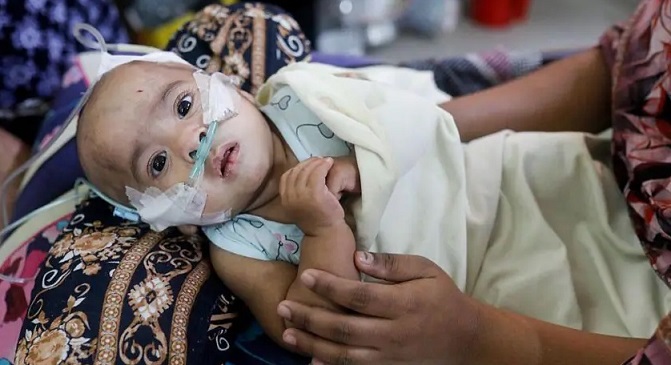
Bangladesh’s measles outbreak has killed more than 220 children since March 15, with suspected cases rising to 34,980 nationwide, mostly among children aged between six months and five years.
One of the worst-hit areas is Kurukpata in the Chittagong Hill Tracts, home to Indigenous communities near the Myanmar border. Children in these remote rural areas are often outside vaccination coverage, while some families avoid immunisation out of fear.
“The most affected area of Chittagong Hill tracts is Kurukpata, one of the remotest parts of Bangladesh,” district health chief Sheikh Fazle Rabbi told reporters, adding that more than 80 children had been treated for measles there.
Local council head Kratpung Mro said the number of cases was unusually high. “Communication from Kurukpata is difficult,” he said. “People, mostly farmers, are among the poorest and cannot afford even boat or motorcycle fares to reach the hospital.”
He said the government should “launch awareness programmes and bring Indigenous communities under vaccination coverage”.
Ngangoi Mro, a 30-year-old farmer, took his two-year-old son Rengle Mro to a clinic after the child developed high fever, cough and diarrhoea. “We walked four kilometres (2.5 miles) and then took a vehicle to the hospital from our village, as my boy became very weak,” he said.
Measles, one of the world’s most contagious diseases, spreads through coughs and sneezes and can cause brain swelling and severe respiratory problems. Bangladesh health authorities, with support from Unicef, WHO and security forces, are continuing vaccination efforts.