
Last Updated on March 8, 2026 1:27 pm by INDIAN AWAAZ
AMN /Kathmandu
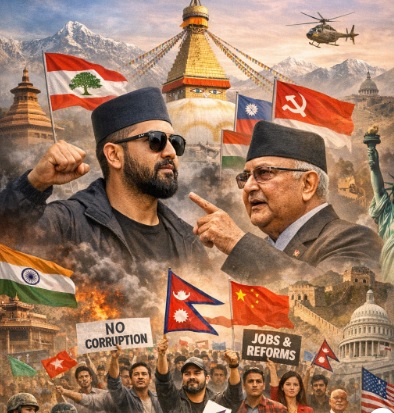
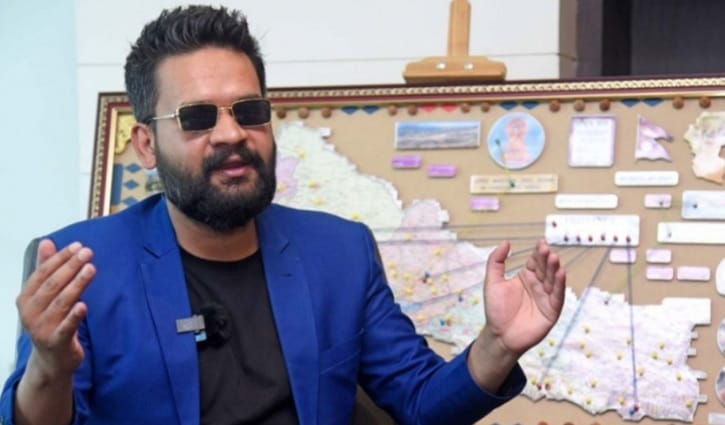
In a dramatic shift in Nepal’s political landscape, rapper-turned-politician Balendra Shah, popularly known as Balen, is set to become the country’s next prime minister after his Rastriya Swatantra Party (RSP) secured a sweeping victory in the latest parliamentary elections. The results signal a major setback for traditional political forces that have dominated Nepal’s politics for decades.
The 35-year-old leader, who rose to national prominence through music and later anti-establishment politics, defeated veteran politician KP Sharma Oli of the Communist Party of Nepal (Unified Marxist–Leninist) by a massive margin of nearly 50,000 votes in the Jhapa-5 constituency. Oli, who has served as prime minister four times and remains one of Nepal’s most influential political figures, was considered a formidable contender before the election.
Historic Political Shift
According to early election results, the Rastriya Swatantra Party has won 106 constituencies and is leading in another 18 seats under the first-past-the-post electoral system, putting it in a commanding position to form the next government in Nepal’s 275-member House of Representatives.
The once-dominant Nepali Congress has managed to win 15 seats and is leading in three more, while the Communist Party of Nepal (UML) has secured seven seats and leads in three constituencies. Meanwhile, the Nepal Communist Party has won six seats and is ahead in two.
Nepal’s parliamentary elections were held on March 5, with approximately 60 percent voter turnout, reflecting strong public participation despite economic challenges and political fatigue after years of unstable coalition governments.
Under Nepal’s electoral system, 165 members of parliament are elected directly, while the remaining 110 are chosen through a proportional representation system, ensuring representation for smaller parties, women, and minority communities.
Youngest and First Madhesi PM
If formally elected by parliament, Balendra Shah will become the youngest prime minister in Nepal’s history and the first Madhesi leader to occupy the country’s top executive post. The Madhesi community, largely concentrated in Nepal’s southern plains bordering India, has long demanded greater political representation and rights within the federal system.
Shah’s meteoric rise has been fueled by his appeal among urban youth, professionals, and voters disillusioned with Nepal’s traditional political parties, which have often been accused of corruption, factionalism, and failure to deliver economic reforms.
Political analysts say the election result reflects a strong anti-establishment wave, particularly among young voters who were drawn to Shah’s image as a reformer promising transparency, efficient governance, and modernization.
From Music to Politics
Before entering politics, Shah was widely known as a rapper and civil engineer. His popularity surged after he won the Kathmandu mayoral election in 2022 as an independent candidate, defeating candidates from major parties. His tenure as mayor was marked by aggressive urban management policies, anti-corruption drives, and a focus on improving city infrastructure.
Building on that success, Shah launched the Rastriya Swatantra Party, presenting it as a movement aimed at transforming Nepal’s governance system and reducing the influence of entrenched political elites.
Key Challenges Ahead
Despite the electoral victory, Shah faces several pressing challenges. Nepal continues to struggle with high unemployment, economic stagnation, and large-scale migration of young workers abroad. The country also remains vulnerable to natural disasters and depends heavily on remittances from overseas workers.
In addition, the new government will have to navigate Nepal’s delicate foreign policy balance between its two powerful neighbours, India and China, both of which have significant strategic and economic interests in the Himalayan nation.
India Congratulates Nepal
Indian Prime Minister Narendra Modi congratulated the people of Nepal for the successful conduct of the elections. In a message posted on social media, Modi described the polls as a “historic milestone in Nepal’s democratic journey.”
He reiterated that India remains committed to working closely with Nepal and its new government to deepen cooperation in areas such as trade, connectivity, development, and regional stability.
India and Nepal share deep cultural, economic, and strategic ties, including an open border and close people-to-people connections. Analysts say New Delhi will closely watch the policy direction of Shah’s government, particularly regarding infrastructure projects, hydropower cooperation, and cross-border trade.
A New Political Era?
The landslide victory of the RSP has been widely described as one of the most significant political upheavals in Nepal since the country adopted a federal democratic republic system in 2008 following the abolition of the monarchy.
Whether Balendra Shah can translate his electoral popularity into effective governance remains to be seen. However, for many voters in Nepal, the election result represents a powerful demand for change and a new political beginning in the Himalayan nation.