
Staff Reporter
Scientists have developed a promising new cancer drug designed to remain largely inactive in healthy tissues and switch on specifically inside cancer cells, potentially offering a more targeted alternative to conventional chemotherapy.
Traditional chemotherapy works by attacking rapidly dividing cells. However, because some healthy cells also divide rapidly, they can be affected along with cancer cells. This can lead to a range of adverse effects and has driven researchers to develop therapies that can distinguish between healthy and malignant cells more precisely.
A collaborative research team led by Dr Asis Bala of the Institute of Advanced Study in Science and Technology (IASST), an autonomous institute under the Department of Science and Technology, Government of India, and Dr K.P. Bhabak of the Indian Institute of Technology Guwahati (IIT-Guwahati) has developed a new candidate drug called RK-251.
The compound has been designed as a “smart” drug that is activated predominantly within cancer cells. The researchers aim to exploit a biological difference between tumour cells and normal cells to deliver the drug’s anticancer activity more selectively.
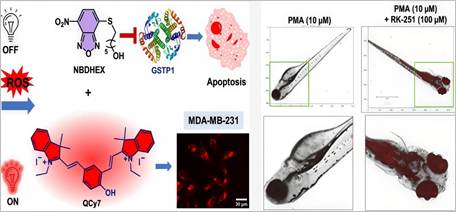
Cancer cells frequently generate unusually high levels of reactive oxygen species (ROS). These chemically reactive molecules play an important role in cellular processes but can become damaging when present in excessive amounts. The researchers used this characteristic as a trigger for activating RK-251.
After entering a cancer cell, elevated ROS levels can activate RK-251 and release a potent anticancer compound known as NBDHEX. The released compound works by interfering with proteins that cancer cells rely on for survival and for developing resistance to treatment.
This mechanism is intended to create a form of biological “switch”: the drug remains relatively inactive while circulating through normal tissues but becomes activated when it encounters the oxidative environment characteristic of cancer cells.
In preclinical experiments, RK-251 demonstrated promising anticancer activity against triple-negative breast cancer (TNBC) cells, an aggressive form of breast cancer that can be difficult to treat because it lacks three commonly targeted receptors.
Importantly, the researchers observed substantially lower effects on healthy cells in their studies, indicating that the compound may have the potential to improve the selectivity of cancer treatment. However, these findings are still at the preclinical stage and cannot yet establish the drug’s safety or effectiveness in humans.
The research team also examined the behaviour of RK-251 in zebrafish embryos (Danio rerio) as part of its preliminary safety assessment. The study found no obvious signs of toxicity under the conditions tested. The compound also displayed the expected fluorescence in the presence of reactive oxygen species, providing evidence that its ROS-responsive activation mechanism was functioning.
The fluorescence property could potentially help researchers track the drug’s behaviour and activation, although further investigations will be required to determine how effectively the mechanism works in more complex biological systems.
The development represents an important step in the broader effort to make cancer treatment more precise. Rather than exposing healthy and cancerous tissues to the same active drug, targeted approaches seek to exploit unique features of tumour cells so that therapeutic activity is concentrated where it is needed most.
Nevertheless, RK-251 remains an experimental drug candidate. Further laboratory studies, detailed toxicology assessments and eventually appropriately designed clinical trials will be required before its safety and effectiveness in cancer patients can be established.
The research has been published in the ACS Journal of Medicinal Chemistry, adding to the growing body of work focused on developing next-generation cancer therapies that can selectively recognise and attack malignant cells while reducing damage to healthy tissue.
If subsequent studies confirm the compound’s selectivity, safety and therapeutic effectiveness, ROS-activated drugs such as RK-251 could potentially become part of a new generation of precision cancer treatments. For now, however, the findings should be viewed as an encouraging preclinical development rather than a replacement for chemotherapy already available to patients.
Link to publication: https://doi.org/10.1021/acs.jmedchem.6c01286