
Aafreen Hussain / Kolkata
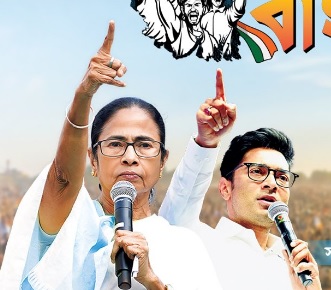
Trinamool Congress National General Secretary Abhishek Banerjee’s dramatic statement—”Bring back all the rebel MPs and MLAs, and I will resign within 24 hours”—has triggered intense political debate across West Bengal. While the remark appeared to be a direct challenge to dissident leaders, it has also reignited speculation about the deepening divisions within the party.
Several rebel TMC leaders have repeatedly accused Abhishek Banerjee of centralising power and sidelining senior leaders. Figures such as Ritabrata Banerjee, Sudip Bandopadhyay, Sayani Ghosh, Madan Mitra, and other dissidents have, at different times, questioned the party’s internal functioning and leadership style. Some have argued that the crisis within the party is rooted in decision-making becoming concentrated in a few hands, while others have demanded greater internal democracy. Not all of these leaders have publicly responded to this latest statement at the time of writing, but the challenge has renewed focus on their earlier criticisms.
On the other hand, senior TMC leader Kunal Ghosh has consistently defended Abhishek Banerjee, maintaining that the party remains united under Mamata Banerjee’s leadership and dismissing the rebels as politically insignificant. He has argued that the dissidents lack public support and that the organisation is capable of overcoming internal disagreements.
Senior MP Kalyan Banerjee has also repeatedly projected confidence in the party’s leadership, asserting that individual ambitions cannot outweigh organisational discipline. While his remarks have often been directed at dissidents in general, they reinforce the message that the official TMC leadership stands firmly behind Abhishek Banerjee.
Interestingly, Mamata Banerjee, without directly naming Abhishek Banerjee in recent remarks, has stressed that those who remain loyal to the party’s ideals and discipline will continue to enjoy her confidence. Political observers view these comments as an indirect endorsement of the existing leadership structure, although the Chief Minister has avoided escalating the public confrontation.
The BJP has seized upon the controversy. BJP leaders have argued that Abhishek Banerjee’s statement is itself evidence of serious internal unrest within the Trinamool Congress. According to the BJP, a leader does not offer to resign unless significant pressure exists inside the organisation. They claim the episode exposes growing dissatisfaction among senior TMC leaders.
The CPI(M) has taken a different approach. Left leaders contend that the dispute reflects a struggle for organisational control rather than ideological differences. According to them, the public disagreement demonstrates that personal power has overtaken political principles within the ruling party.
The Congress has also criticised the developments, alleging that the Trinamool Congress is experiencing a leadership crisis that has weakened governance. Congress leaders argue that public disputes among senior leaders distract attention from issues affecting ordinary citizens.
Public reaction appears sharply divided.
Political analysts believe the statement may have been intended to display confidence but could also reveal the extent of internal pressure. Some retired bureaucrats suggest that such public challenges rarely emerge unless serious organisational differences already exist.
Business leaders say political stability is essential for investor confidence and hope the dispute does not affect governance. Academics see the controversy as an example of how personality-driven politics can overshadow institutional decision-making.
Among young voters, opinions are mixed. Some believe Abhishek Banerjee demonstrated confidence by publicly putting his position on the line, while others question whether leadership disputes should be resolved through media statements rather than internal party mechanisms.
Social media discussions have become equally polarised, with supporters portraying the statement as a bold display of accountability, while critics describe it as a sign of growing instability within the party.
Critical Questions
If the rebel MLAs and MPs are truly insignificant, why issue such a dramatic resignation challenge?
Is Abhishek Banerjee attempting to consolidate his authority or respond to growing internal pressure?
Will Mamata Banerjee eventually intervene more directly to settle the leadership dispute?
Can the Trinamool Congress bridge the widening gap between its official leadership and dissident camp?
Does this episode strengthen the BJP’s narrative that the TMC is internally divided?
Will the controversy affect the party’s organisational strength ahead of future political battles?
Is the conflict about ideology, leadership style, or control over the party organisation?
Can public confidence in the party remain intact if internal disagreements continue to play out in the open?
While Abhishek Banerjee’s statement may have been intended to silence critics, it has instead intensified debate about the future direction of the Trinamool Congress. Whether the challenge marks the beginning of reconciliation or a deeper political confrontation remains one of the biggest questions in West Bengal politics.