
Last Updated on July 9, 2026 12:43 am by INDIAN AWAAZ
Staff Reporter / New Delhi
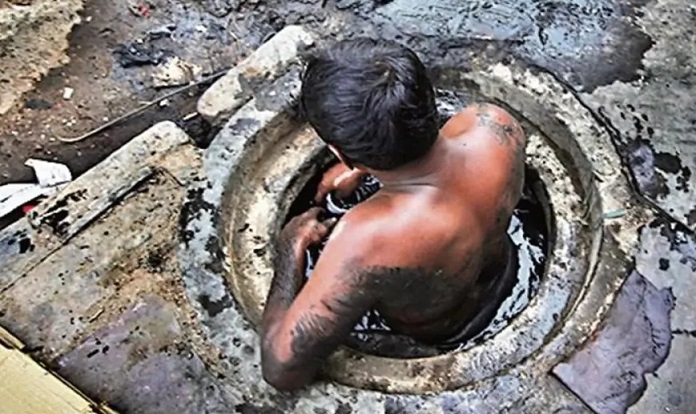
At least 101 sanitation workers have died while cleaning sewers and septic tanks across India in the first 188 days of 2026, according to data compiled by the Safai Karamchari Andolan (SKA), highlighting what the organisation described as a continuing failure to eliminate hazardous manual cleaning practices despite existing legal safeguards.
The latest figures follow two separate incidents in Madhya Pradesh on July 8 that claimed three lives. According to SKA, the national capital region accounted for 12 of the reported deaths. The organisation noted that the toll has risen sharply compared with the corresponding period last year, when 121 deaths were recorded during the entire year of 2025.
SKA said sewer and septic tank fatalities have been reported from 16 states this year, averaging one death every 45 hours. The organisation alleged that governments have failed to take effective steps to prevent such incidents despite repeated judicial interventions and statutory prohibitions on manual scavenging.
Citing its records, SKA said it has documented 1,726 sewer and septic tank deaths since the enactment of the Prohibition of Employment as Manual Scavengers and their Rehabilitation Act, 2013. More than two-thirds of these deaths were reported from seven states—Tamil Nadu (332), Gujarat (216), Delhi-NCR (157), Maharashtra (155), Uttar Pradesh (148), Haryana (104) and Bihar (91).
The organisation also pointed to a sharp increase in fatalities over the past decade, stating that reported deaths rose from 39 in 2016 to 137 in 2017, and have remained a persistent concern despite legal and policy measures.
Referring to the Union government’s NAMASTE (National Action for Mechanised Sanitation Ecosystem) scheme, launched in 2023 to promote mechanised sanitation, SKA alleged that progress on mechanisation has been inadequate and that manual entry into sewers continues in many parts of the country. It further argued that the persistence of such deaths reflects shortcomings in implementing existing laws and safety protocols.
Calling the deaths “preventable,” SKA urged the Central government to take immediate steps to ensure complete mechanisation of sewer and septic tank cleaning, enforce accountability for violations, and put an end to fatalities among sanitation workers.