
Last Updated on April 2, 2026 12:20 am by INDIAN AWAAZ
US President Trump will deliver an address to the nation to provide an important update
AMN / NEWS DESK
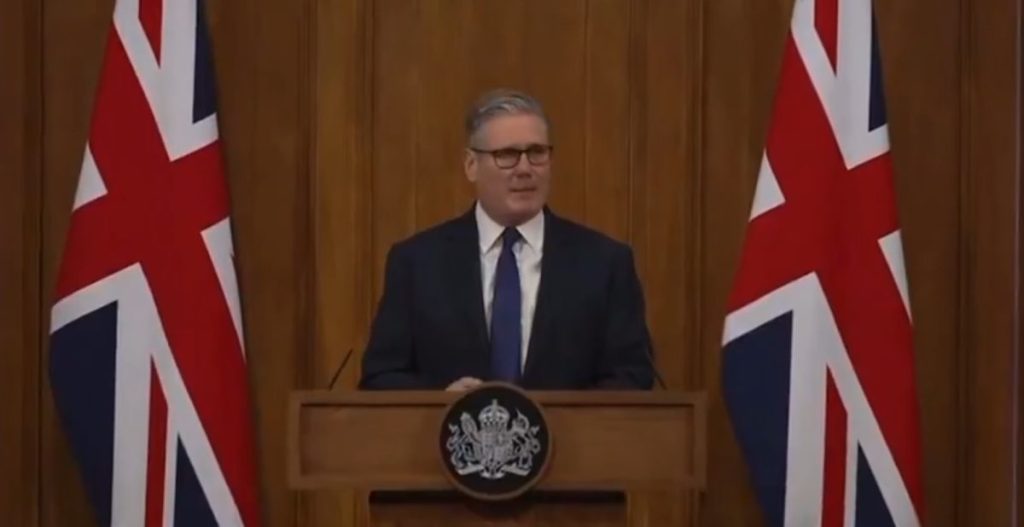
UK Prime Minister Keir Starmer has cautioned that the ongoing tensions involving Iran could have wider economic implications for Britain, while making it clear that the United Kingdom will not become directly involved in the conflict.
Speaking at a press conference in London, Starmer said the situation in the Middle East could affect the country’s economic outlook, particularly through its impact on global energy supplies and trade routes. However, he stressed that the crisis is “not Britain’s war” and reaffirmed that the UK would not be drawn into the conflict as it does not serve the country’s national interest.
Addressing concerns about the rising cost of living, the Prime Minister said easing tensions in the region remains the most effective way to protect households and the broader economy. He emphasised that stabilising the Middle East and restoring the flow of energy supplies are critical steps in limiting economic disruption.
Starmer also highlighted the strategic importance of the Strait of Hormuz, a key maritime passage through which a significant share of the world’s oil and gas shipments pass. He warned that prolonged disruption to this route could further strain global energy markets and drive up costs.
To address the situation, the Prime Minister announced that the UK government would intensify diplomatic efforts with international partners. He said that the country’s Home Secretary, Yvette Cooper, would convene discussions with allied nations later this week to explore diplomatic and political measures aimed at easing tensions and restoring maritime security in the region.
The planned discussions will focus on reopening shipping routes, ensuring the safety of vessels and seafarers currently stranded in the region, and enabling the continued movement of essential commodities through international waters.
Starmer’s remarks come at a time when rising tensions linked to Iran have raised global concerns about energy security and supply chains. Analysts warn that any prolonged disruption around the Strait of Hormuz could have significant consequences for international trade and fuel prices.
The UK government has reiterated that its priority remains diplomatic engagement and coordination with global partners to prevent further escalation while safeguarding economic stability.
Earlier, Australian Prime Minister Anthony Albanese, in his address to the nation, said that the months ahead might not be easy due to the ongoing Middle East crisis. He noted that although Australia has nothing to do with the war in West Asia, Australians are suffering because of it. He said that the economic ripples the war has sent will affect Australia for months. Mr. Albanese said that on Monday, the National Cabinet adopted the National Fuel Security Plan, which would help Australians in case supplies are seriously disrupted over the long term. Mr Albanese said his administration cut the fuel excise in half, and it will be effective for the next three months. He urged common citizens against hoarding fuel and asked them to use only the bit they need. He also urged citizens to use public transport if they can.
The White House has said that US President Donald Trump will deliver an address to the nation to provide an important update on Iran tomorrow morning. Earlier, Mr Trump said he expected that U.S. military forces would leave Iran in two or three weeks. He said they have knocked out tremendous amounts of missile-making facilities in Iran. He also claimed that Iran has asked for a ceasefire.
However, Iranian Foreign Ministry spokesperson Esmaeil Baqaei said there had been no direct negotiations with the Trump administration since the conflict began. Tehran has reportedly threatened to attack American tech companies if more Iranian leaders are killed.
Meanwhile, Israeli Defence Minister Israel Katz has said that they will destroy all homes in Lebanese villages near the border, and 600,000 people who fled the south will not be allowed home until northern Israel is secure. He reiterated Israeli plans to establish a buffer zone in southern Lebanon. At least 10 people were reportedly killed and several others injured after multiple missiles hit the Jnah neighbourhood of Lebanon’s capital, Beirut, during an overnight bombing. Lebanon‘s minister of social affairs, Haneen Sayed, told a news agency that Israel‘s ground operation was deepening the risk that Lebanese would be stuck in long-term displacement.