
Last Updated on March 6, 2026 5:38 pm by INDIAN AWAAZ
R. Suryamurthy
In kitchens across India, the evening ritual remains unchanged: a pot of dal simmering, rotis puffing on a hot tawa, and a bowl of rice waiting to be served. Yet behind this simple meal — the everyday thali — lies a story that now stretches far beyond local mandis and vegetable carts, reaching all the way to the conflict-scarred waters of the Persian Gulf.
According to a new monthly indicator from CRISIL, the cost of preparing a home-cooked vegetarian thali in February remained largely unchanged compared with a year earlier, even as the price of tomatoes surged sharply. The modest stability in the cost of the staple meal — long seen as a barometer of household affordability — comes at a moment when global anxieties are rising due to the ongoing Iran war 2026, which has disrupted shipping routes and cast uncertainty over food trade across West Asia.
For millions of Indian households, the thali is not just food — it is a measure of economic comfort. And in February, the numbers tell a story of unusual balance.
The average cost of a vegetarian thali held steady year-on-year, as lower prices of onions, potatoes and pulses offset the surge in tomatoes. A non-vegetarian thali, which replaces dal with chicken, became slightly cheaper, with its cost falling about 3 percent from a year earlier.
But tomatoes — that indispensable ingredient of Indian cooking — have emerged as the main disruptor.
Prices climbed to around ₹33 per kilogram in February, up roughly 43 percent from a year earlier, after crop arrivals in wholesale markets dropped by nearly a third between November and January. The decline followed delayed transplantation in key growing regions, which affected crop development and yields.
“The cost of a vegetarian thali remained stable on-year in February as lower onion, potato and pulse prices offset a sharp rise in tomato prices,” said Pushan Sharma, director at CRISIL Intelligence.
For households already navigating rising living costs, such shifts can be felt immediately.
In a middle-class apartment complex in Delhi, homemaker Sunita Verma says she has quietly changed the way she cooks. “Tomatoes are expensive again,” she said while preparing lunch. “Now I use fewer tomatoes in dal and sabzi. Sometimes I add curd or tamarind instead.”
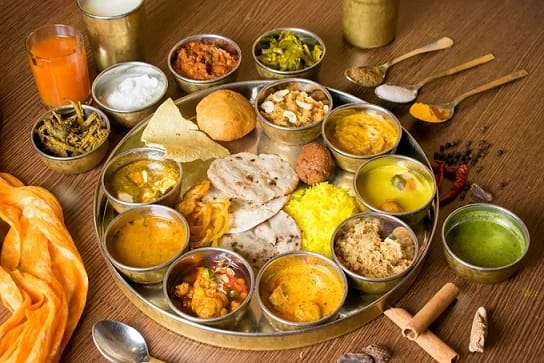
Such adjustments are common across India’s kitchens. The thali — typically consisting of roti, rice, vegetables, dal, curd and salad — adapts quickly to market realities.
Ironically, the spike in tomatoes comes even as other key ingredients have become cheaper.
Onion prices fell about 24 percent year-on-year due to the arrival of late kharif crops and weak export demand. Potato prices dropped roughly 13 percent as harvest arrivals increased and cold-storage stocks from the previous season continued to be released. Pulse prices also declined, aided by higher inventories of tur and Bengal gram.
These declines helped prevent the overall thali cost from rising.
Yet the story of India’s dinner plate now intersects with geopolitics.
The escalating conflict in West Asia has raised fears about disruptions in trade routes passing through the Strait of Hormuz — a maritime corridor that handles a large share of global oil shipments and regional commerce. While the immediate concern for India is energy supply, food exporters are also watching the situation closely.
India’s basmati rice exporters, in particular, are wary.
Iran alone accounts for nearly 18 percent of India’s basmati shipments, while other Middle Eastern countries collectively absorb more than half of exports. With shipping routes under pressure and insurers raising risk premiums, traders fear logistical delays and demand disruptions.
“The Middle East uncertainties and potential trade disruptions may soften demand for basmati rice in the near term,” Sharma said.
In the bustling rice markets of Haryana’s Karnal district — often called India’s basmati capital — exporters say buyers in the region are already cautious.
“Orders haven’t stopped,” said a trader who exports rice to the Gulf. “But everyone is waiting to see how the war situation evolves.”
For farmers and traders alike, the stakes are high. Basmati exports are a major source of income for northern India’s agricultural belt, and even temporary disruptions could ripple through rural markets.
The impact, however, may not be uniform.
Non-basmati rice — which India exports largely to African countries — is expected to remain relatively insulated from the West Asian turmoil. That segment of trade relies on different shipping routes and markets, reducing the risk of immediate disruption.
Back in Indian kitchens, though, the global turmoil feels distant — at least for now.
Vegetable prices are expected to ease in the coming weeks as seasonal supplies improve. Potato prices are likely to remain subdued through March and April during the peak arrival season, while onion prices could stay under pressure unless exports pick up.
Tomatoes, however, may continue to pinch household budgets a little longer.
Prices are expected to remain elevated until mid-April before stabilising as the market transitions between crop cycles.
Until then, the humble thali will continue to tell a quiet story — of harvests and weather, of global trade routes and wars far away, and of how geopolitics ultimately arrives at the dinner table.
In India, even the simplest meal carries the imprint of the world beyond the kitchen.