
Last Updated on October 26, 2025 7:26 pm by INDIAN AWAAZ
Aafreen Hussain from Kolkata
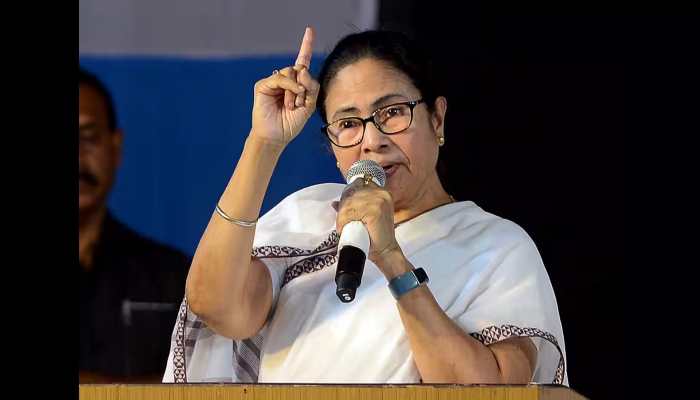
The Assembly in West Bengal election is still distant, yet political parties have started the campaign. On November 2nd, the ruling Trinamool Congress TMC is set to transform the historic Shaheed Minar ground from a rally site into the launchpad for the 2026 Assembly election. Under the joint banner of Chief Minister Mamata Banerjee and Abhishek Banerjee, this event is not merely a political gathering; it is the party’s first major test of public trust following the 2024 Lok Sabha results.
With anti-incumbency hovering and the rise of the ISF threatening the crucial minority vote bank, the core question is clear: Can the TMC rally echo its past success and once again become the ‘symbol of change,’ or has the public already begun searching for a new alternative? The party’s strategy—from countering the Centre’s NRC/CAA policy to addressing urgent law and order concerns—will be laid bare on this critical platform.
According to Trinamool sources, several major issues will be raised at the rally. The most significant among them is the opposition to the Centre’s policy on the NRC and the Citizenship Amendment Act (CAA). Mamata Banerjee has repeatedly said, “NRC will not be implemented in Bengal, no citizen will be driven out of this country.” This statement is likely to echo once again from the Shaheed Minar stage. But the real question is — after the 2024 Lok Sabha results, will this issue alone be enough to win back the section of voters who drifted away from Trinamool?
Another major focus of the party will be alleged irregularities in the voter list and the Centre’s interference. The Trinamool Congress claims that the BJP, under administrative pressure, is trying to remove the names of minorities and Trinamool supporters from the voter rolls. The rally may mark the beginning of a special campaign, urging party workers to go “door to door” and alert people about these alleged efforts.
At the same time, rising incidents of crimes against women, rape, and law-and-order lapses in the state will inevitably come up. These recent cases have given strong ammunition to the opposition. How Mamata Banerjee responds to these concerns will be one of the most closely watched aspects of the rally. The people today do not just want promises — they demand accountability and results.
Meanwhile, the rise of the ISF (Indian Secular Front) has become a new challenge for Trinamool. A visible divide has begun to emerge within the minority vote bank, which the BJP, Congress, and ISF are all attempting to exploit. In this context, Mamata Banerjee’s biggest political challenge will be maintaining a delicate balance — reassuring minority voters without alienating Hindu voters.
The rally is also expected to raise strong questions against the BJP on issues like corruption, artificial price rise, unemployment, and farmers’ distress. The Trinamool may ask: “Why is the Delhi government withholding Bengal’s rightful dues?”
“Why is the BJP so silent on crimes against women in states like Madhya Pradesh and Rajasthan?” “How can a party that claims to stand for women’s respect remain quiet when its own leaders insult Bengali women?”
Yet, amid all these questions, the real one remains — do the people still have faith in Trinamool’s message?
The March 10, 2024, Brigade Parade Ground rally was a major success for the Trinamool Congress, but its political impact wasn’t as strong as expected. This time, the Shaheed Minar gathering isn’t just another public rally — it’s a “platform for rebuilding trust.” Will this rally be able to restore that lost faith? Or have the people already begun searching for a new alternative? That remains to be seen.
West Bengal’s politics today stands at a crossroads. On one hand, the BJP is steadily strengthening its organizational base; on the other, Trinamool is struggling to shake off the anti-incumbency image. The central question is — can Mamata Banerjee once again turn public emotion into her political strength? Or will the call for change this time pass into someone else’s hands?
This rally at Shaheed Minar is not just a political event — it’s a test. A test to gauge the public’s pulse.
It will determine how relevant Mamata Banerjee’s politics still is to the people of Bengal — and who they will choose to lead the next chapter of the state’s journey.