
Last Updated on September 3, 2026 11:33 am by INDIAN AWAAZ
AMN / NEWS DESK
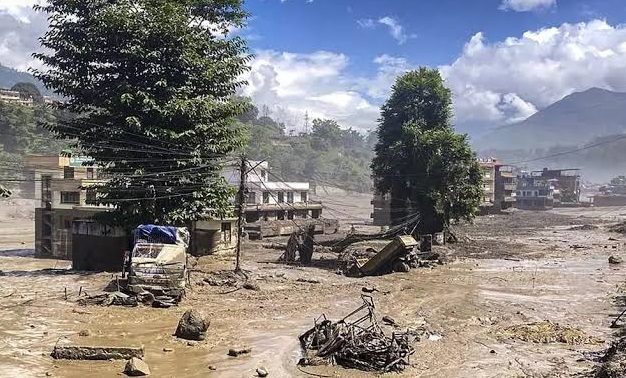
The death toll from the devastating Nepal-Tibet flash floods tragedy has gone up to 1,250, as rescuers battled rain and debris to trace those believed to be trapped in the tunnels along the course of the Bhotekoshi river and underground powerhouses in the Himalayan nation.
Prime Minister Balendra Shah said the disaster’s link to climate change must be strongly raised with the international community, as symbolic funerals were held by families of locals still missing after last week’s flash floods. Among the missing people, 583 are foreigners.
The joint forces of security personnel, including the Nepal Army, have so far rescued 11,993 people using helicopters and land routes. Around 21,314 security personnel have been mobilised for the search and rescue operations.
On the Chinese side, the death toll in the flash flood that struck Gyirong county in Tibet near the Nepal border has increased to 21, with 541 others still missing.
Addressing the House of Representatives, Prime Minister Shah said the scale and nature of the disaster raised serious questions about the growing risks faced by people living in the Himalayan region due to climate change.
International development partners, including the Asian Development Bank, World Bank, European Union and United Nations, have also pledged support, while expert teams from India, China and South Korea are being mobilised for rescue operations at hydropower sites.
Families of people who went missing in the Bhotekoshi floods have begun performing the funeral rites of their loved ones using effigies made of kusha grass, as they did not receive any clues of their whereabouts even after eight days of the disaster.
Most flood victims have been left without a place to observe the mourning rituals, as the floodwaters not only swept away family members but also their houses.
Those who lost everything in the floods and came to the capital city seeking shelter have also been unable to find space at public facilities for the rituals.