

Last Updated on March 19, 2026 10:53 pm by INDIAN AWAAZ
R. Suryamurthy
Global trade is set to lose momentum in 2026 after a surprisingly strong performance last year, with economists warning that the ongoing Middle East conflict could further dampen growth by pushing up energy prices and disrupting critical supply chains.
According to the latest Global Trade Outlook and Statistics released by the World Trade Organization, world merchandise trade growth is projected to slow to 1.9% in 2026, down sharply from 4.6% in 2025, as a post-pandemic surge in trade—particularly in artificial intelligence (AI)-related goods—begins to normalize.
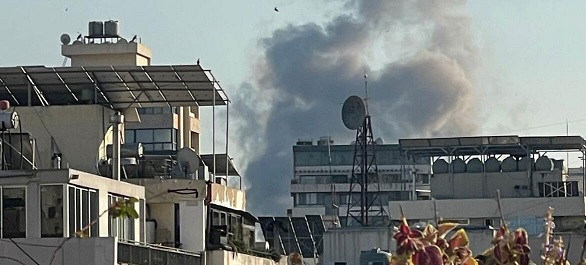
The report suggests that while global trade remains broadly resilient, the conflict in the Middle East has emerged as a key downside risk. Elevated prices of crude oil and liquefied natural gas (LNG), if sustained through the year, could shave 0.3 percentage points off global GDP growth and cut merchandise trade expansion to as low as 1.4%.
“The outlook reflects the resilience of global trade, buoyed by high-technology products and digitally delivered services,” WTO Director-General Ngozi Okonjo-Iweala said. “However, this baseline forecast is under pressure from the conflict in the Middle East, particularly through sustained increases in energy prices and their spillover effects on food security and costs.”
Beyond energy markets, disruptions in the Strait of Hormuz—a vital artery for global trade—have compounded concerns. The blockade has hit fertilizer shipments, with roughly one-third of global exports typically passing through the route. Major agricultural economies, including India, Thailand and Brazil, rely heavily on Gulf supplies for urea imports, raising fears of cascading impacts on food production and prices.
At the same time, Gulf nations themselves face mounting food security challenges due to high import dependence, particularly for staples such as rice, corn, soybeans and vegetable oils.
The services sector, which includes transport and travel, is also feeling the strain. WTO economists estimate that global services trade growth will ease to 4.8% in 2026 from 5.3% in 2025, but could slow further to 4.1% if disruptions persist. The Middle East, accounting for 7.4% of global transport services exports, has seen severe interruptions, including a collapse in maritime traffic through Hormuz and more than 40,000 flight cancellations.
Despite these headwinds, the report highlights potential upside if geopolitical tensions ease quickly and investment in AI continues apace. Under such a scenario, merchandise trade growth could be boosted by 0.5 percentage points, reaching as high as 2.4% in 2026.
The strong performance in 2025 was largely driven by a surge in demand for AI-enabling goods such as semiconductors, chips and data transmission equipment. Trade in these products jumped 21.9% year-on-year to $4.18 trillion (approximately ₹347 lakh crore), accounting for 42% of total global trade growth despite representing only a fraction of overall trade volumes.
WTO economists also noted that the negative impact of tariffs last year was less severe than expected, due to delayed implementation of new U.S. duties, limited retaliation by trading partners, and widespread exemptions—particularly for high-tech goods.
Looking ahead, Asia is expected to lead global trade growth in 2026, with merchandise imports projected to rise by 3.3% and exports by 3.5%. In contrast, growth in Europe and the Middle East is expected to remain subdued, reflecting both structural challenges and the direct impact of regional instability.
While the global economy is forecast to remain relatively stable—with GDP growth easing marginally from 2.9% in 2025 to 2.8% in 2026—the WTO cautions that prolonged conflict could trigger deeper structural shifts in trade routes, supply chains and costs.
For now, much hinges on how quickly tensions in the Middle East ease—and whether the AI-driven trade boom can continue to offset mounting geopolitical risks.