
Last Updated on February 1, 2026 4:25 pm by INDIAN AWAAZ

R. Suryamurthy / New Delhi
The 2026 Union Budget has emerged as a surgical intervention for India’s healthcare economy. While the headline figure of ₹106,530.42 crore for the Ministry of Health and Family Welfare suggests a steady climb in spending, an analytical look at the fine print reveals a more human-centric pivot: a transition from merely building hospitals to subsidizing survival.
The Fiscal Heartbeat: Education and Innovation
The government is betting heavily on the “intellectual infrastructure” of medicine. The allocation of ₹4,821.21 crore to the Department of Health Research signals a shift away from a generic-drug-only identity toward high-stakes clinical innovation. By funneling massive outlays into apex bodies like AIIMS New Delhi and PGIMER Chandigarh, the budget attempts to address the chronic brain drain by anchoring specialized research and training within domestic borders.
Further, the 20% surge in the Ayush budget (to ₹4,408.93 crore) reflects an analytical move to integrate traditional medicine into mainstream public health, potentially easing the burden on overburdened tertiary care centers.
Customs as a Compass: The Relief Strategy
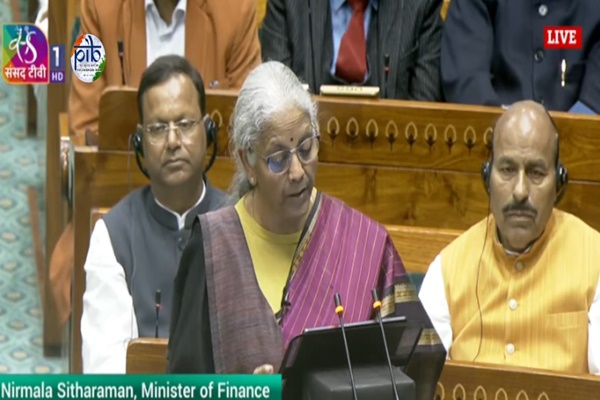
The most visceral impact of Finance Minister Nirmala Sitharaman’s speech is found in the “Part B” tax reforms. The total customs duty exemption on 17 essential cancer drugs is a direct response to the crippling out-of-pocket expenditure that pushes thousands of Indian families into poverty each year.
Analytically, this isn’t just a health benefit; it is an “Ease of Living” economic policy. By extending duty-free imports to seven more rare diseases and streamlining the Lower Deduction Certificate (LDC) process through automation, the government is removing the “bureaucratic tax” often paid by those in medical distress.
Health as an Export: The Tourism Gambit
Perhaps the most strategic addition is the formalization of incentives for medical tourism. By streamlining medical visas and providing tax sweeteners for providers offering high-end specialized treatments, the budget positions India as a global value-hub.
This works in tandem with the ₹5,931.22 crore allocated to the Department of Pharmaceuticals. The goal is clear: use PLI schemes to manufacture medical devices locally, lower the cost of surgery, and use that price advantage to attract foreign exchange through international patients.
The 2026 budget moves away from the “ribbon-cutting” style of healthcare politics. Instead, it focuses on the invisible costs—the customs duties, the research gaps, and the insurance premiums. Success now rests on the “trust-based administration” the Minister promised. If the automated tax processes and pharmaceutical incentives hit their mark, this budget will be remembered not for the trillions it spent, but for the financial friction it removed from the act of staying alive.