
Last Updated on October 13, 2026 3:03 pm by INDIAN AWAAZ
Premium-priced milk, high-value dairy products and growing interest in indigenous cattle are putting the Gir cow in the spotlight across North India.
By PANKAJ YADAV
From the forests of Gujarat’s Gir region to the gaushalas of Haryana, Uttar Pradesh, Delhi and Rajasthan, one indigenous cattle breed is steadily capturing the attention of farmers and dairy entrepreneurs: the Gir cow.
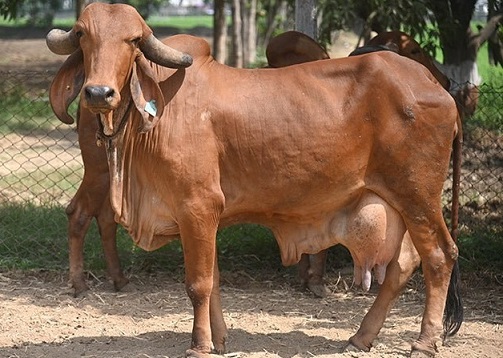
Known for its distinctive appearance, drooping ears, prominent forehead and calm temperament, the Gir cow has become increasingly popular among cattle owners seeking new opportunities in dairy farming. Its reputation for adaptability, milk production and the commercial potential of its by-products has helped it emerge as a sought-after breed beyond its traditional home in Gujarat.
But the growing interest in Gir cattle is not just about milk. For many farmers, it represents an opportunity to diversify their income through the sale of curd, buttermilk, butter, ghee, dung and other products.
Milk That Commands a Premium Price
In much of North India, cow’s milk traditionally sells for less than buffalo’s milk. While buffalo milk at local dairies may cost around ₹80–85 per kilogram and ordinary cow’s milk ₹55–60, Gir cow’s milk is reportedly fetching ₹120–170 per kilogram in Delhi and neighbouring districts of Haryana and Uttar Pradesh.
The premium is often attributed to consumer interest in A2 milk, which contains the A2 variant of beta-casein protein. Gir milk is commonly marketed as A2 milk, although its composition can vary and the claimed health advantages over other milk types are not conclusively established.
For dairy farmers, however, the market’s willingness to pay a premium has made Gir cattle an attractive business proposition. Consumers seeking milk from indigenous breeds are helping create a specialised market in which quality, breed identity and farm practices can influence prices.
From Milk to Ghee: A Wider Source of Income
The commercial value of the Gir cow extends well beyond its daily milk yield. Farmers and gaushala operators are finding customers for a range of dairy products, particularly buttermilk, butter and traditionally prepared ghee.
At a Gir cow gaushala near Sohna in Gurugram district, buttermilk reportedly sells for around ₹70 per litre, while ghee made from Gir cow’s milk is priced at approximately ₹4,500 per kilogram.
The breed’s dung and urine also find buyers in certain agricultural and traditional-product markets. According to estimates cited by those involved in the trade, a tractor-trolley load of Gir cow dung can fetch ₹50,000–60,000, while cow urine is sold for around ₹15–20 per litre. Actual prices can vary considerably according to quantity, quality, processing and local demand.
For farmers, these additional revenue streams can make livestock rearing more commercially attractive, provided the costs of feed, labour, veterinary care, breeding and marketing are managed effectively.
Some farmers also use cow dung and urine in traditional agricultural practices, including the preparation of organic manure and other farm inputs. Claims that these products dramatically increase crop yields or treat serious diseases, however, require scientific evidence and should not be taken as established fact.
Why Farmers Are Turning to Gir Cattle
The growing appeal of Gir cows lies in a combination of traditional reputation and commercial opportunity. The breed is valued for its ability to adapt to different climatic conditions, its generally calm temperament and its potential for sustained milk production.
Compared with other indigenous breeds, individual Gir cows may require different quantities of feed and produce different amounts of milk depending on their genetics, age, health, diet and management. Their maintenance costs and profitability therefore depend heavily on the conditions in which they are raised.
The Government of India is promoting indigenous cattle conservation and development through initiatives such as the Rashtriya Gokul Mission. These efforts have contributed to wider awareness of native breeds and their role in India’s livestock economy.
A Gir cow is commonly reported to produce around 1,500–2,000 litres of milk per lactation, although yields vary substantially from animal to animal and with farm management.
Recognising the Gir Cow
The Gir is one of India’s well-known indigenous dairy cattle breeds, originating in the Gir forest region of Gujarat.
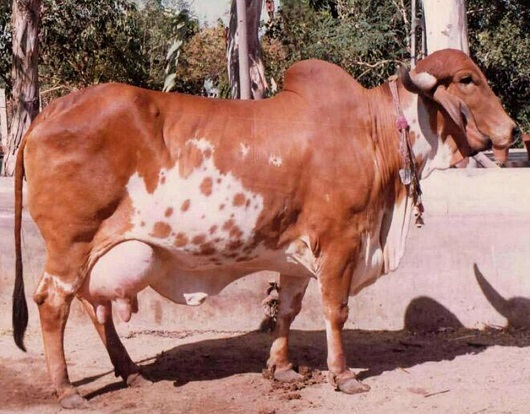
Its appearance makes it relatively easy to recognise. Coat colours can include red, reddish-brown, white, spotted patterns and combinations of these shades. The breed is known for its long, pendulous ears, broad and prominent forehead, and horns that curve backward.
Beyond its distinctive physical features, the Gir is valued for its adaptation to local conditions and its contribution to India’s indigenous cattle heritage.
For farmers considering the breed, experts stress that selecting healthy animals, ensuring balanced nutrition, providing veterinary care and maintaining proper breeding practices are essential to achieving good results.
The Man Who Brought Gir Cows to Gurugram 15 Years Ago
For Chand Singh Yadav, a prominent landowner from Wazirabad village in Gurugram, the Gir cow’s growing popularity is a story that began nearly 15 years ago.
At a time when few people in his area were familiar with the breed, Yadav travelled to Gujarat in search of good indigenous cattle. What began as curiosity eventually led him to Gir Somnath, where he purchased two Gir cows and brought them back to Haryana.
Recalling his first journey, Yadav said, “About 15 years ago, I was looking for a good indigenous cow. A friend first told me about the Gir cow and explained the quality of its milk. Coming from a farming family, I became so curious that I took my car and headed towards Gujarat.”
With the help of local people, he reached Gir Somnath and travelled from village to village looking for suitable animals.
“Finally, I bought two Gir cows and brought them to my village. At that time, no one in our area knew about the Gir cow,” he said.
His experience reflects how interest in indigenous cattle has spread beyond traditional breeding regions, with individual farmers helping introduce new breeds to unfamiliar markets.
From India to Brazil: The Gir Cow’s International Journey
The Gir cow’s story extends far beyond India’s borders. The breed has played an important role in the development of dairy cattle in Brazil, where Indian-origin genetics have contributed to breeding programmes aimed at improving milk production.
One notable chapter began in 1958, when Brazilian cattle breeder Celso Garcia Cid sought to bring high-quality Gir cattle from India. A representative travelled to Gujarat and identified a bull named Krishna, reportedly belonging to the livestock of the then Maharaja of Bhavnagar, Krishnakumar Singh.
In 1960, Krishna was taken to Brazil, where his genetic traits were used in breeding programmes. Artificial insemination and selective breeding subsequently helped expand the influence of Indian-origin Gir cattle in Brazilian herds.
Over time, Gir genetics also contributed to the development of the Girolando breed, created by crossing Gir cattle with Holstein cattle. Girolando has become an important dairy breed in Brazil, combining characteristics of the two parent breeds.
The story is a striking example of how an indigenous Indian breed has influenced livestock production internationally, turning the Gir cow into an important part of a much larger agricultural success story.
A Nationwide Journey to Revive Cow Rearing
While farmers explore the commercial possibilities of Gir cattle, some enthusiasts are working to renew public interest in indigenous breeds more broadly.
Jaipur-based engineer Bharat Singh Rajpurohit has undertaken a nationwide initiative called the “Gau Rashtra Yatra”. For about a year, he has travelled from village to village, visiting gaushalas, meeting cattle owners and spreading awareness about cow rearing.
Rajpurohit says the journey is intended not only to promote indigenous cattle but also to address the practical challenges faced by farmers and those running gaushalas.
“Our objective is to create public awareness about cow rearing. I believe cow rearing should become a status symbol in our country,” he said.
“Earlier, people used to keep cows in their homes, and cows were sometimes gifted by families at their daughters’ weddings. Today, as interest in animal husbandry declines, cow rearing is gradually disappearing from many households. Our effort is to encourage the country’s youth and farmers to turn towards it once again.”
He describes cow rearing as an activity closely connected with India’s economy, sociology and culture.
The initiative also seeks to offer practical support to new cattle owners. According to Rajpurohit, the team shares information on livestock management, helps identify suitable bulls and breeding options, and assists gaushalas in finding trained workers.
Is the Gir Cow’s Popularity All About Marketing?
Asked why the Gir cow has become so prominent across India, Rajpurohit points to the power of marketing and the historical reputation of the breed.
He believes that all indigenous cattle breeds have their own value, but the Gir cow’s association with Gujarat’s royal households helped establish its identity and prestige over time.
“Actually, all the indigenous cows of our country have their own importance. But because kings and princely rulers in Gujarat kept Gir cows, the breed gradually became a status symbol there,” he said.
Rajpurohit also emphasised that a cow’s productivity depends on more than its breed name.
“I say that a cow will give the kind of milk that corresponds to what it eats. Along with keeping cows, their proper care is also very necessary,” he said.
His observation highlights an important consideration for prospective dairy farmers: breed selection alone does not guarantee profitability. Nutrition, animal health, housing, breeding, milk hygiene and access to reliable buyers all play a role.
An Indigenous Breed With a Growing Market
From two cows brought to Gurugram nearly 15 years ago to premium dairy products selling in urban markets, the Gir cow’s growing presence in North India reflects changing consumer preferences and new opportunities in livestock farming.
Its popularity also raises a broader question about the future of indigenous cattle in India: how can farmers preserve traditional breeds while building financially sustainable dairy businesses?
For those entering the sector, the answer may lie in combining sound animal husbandry with transparent marketing, responsible claims about milk and its benefits, and careful management of costs.
The Gir cow may have originated in Gujarat’s forests, but its story is increasingly being written in farms, gaushalas and dairy markets across India—and even overseas.