
Last Updated on August 24, 2025 5:46 pm by INDIAN AWAAZ
HEALTH DESK / New Delhi
Female genital mutilation (FGM) or cutting, a harmful practice affecting millions of women and girls globally, has shown signs of decline in recent years. Yet, experts and youth leaders caution that the pace of reduction is far too slow to achieve elimination targets.
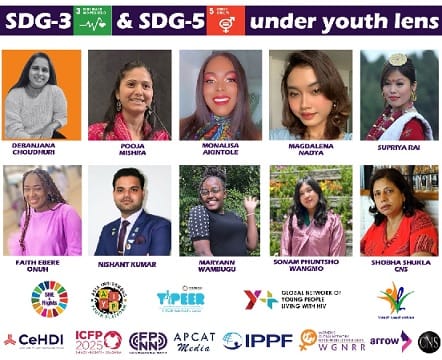
In Kenya, for instance, the prevalence of FGM has dropped significantly—from 38% in 2003 to 15% in 2024. While this marks a noteworthy success, the numbers remain unacceptably high, said Maryann Wambugu, Chair of The PACT and Board Member of Y+ Kenya.
“The rate of decline is not enough. We need to accelerate efforts through proven community-led health interventions. When communities lead, we see reductions in HIV infections, increases in service uptake, and stronger ownership of health choices by young people. But unfortunately, funding for such approaches is still very limited,” she warned.
Wambugu emphasised that young people are not only the face of the HIV epidemic but also the force to end it. “When you invest in our health, you empower our choices and trust our leadership,” she said.
Comprehensive Sexuality Education: A Missing Link
One of the most urgent gaps identified is comprehensive sexuality education (CSE). In many countries of the Global South, children and adolescents grow up without access to accurate, age-appropriate, and inclusive information.
Debanjana Choudhuri, Executive Director of the Women’s Global Network for Reproductive Rights (WGNRR), noted:
“In some regions, what is called sexuality education is nothing more than a single biology class. True CSE should empower young people to understand consent, bodily rights, autonomy, and choice. Without this foundation, harmful practices like FGM continue unchecked, and stigma around contraception or safe abortion thrives.”
Youth Taking the Lead in SRHR Education
Youth leaders are not just demanding change; they are also designing solutions. Magdalena Nadya, Youth Networker at International Planned Parenthood Federation (IPPF) for East and South-East Asia and Oceania, highlighted how digital learning and campaigns are reshaping access to SRHR knowledge.
“Young people are co-creating and co-facilitating CSE, whether in classrooms or on social media platforms. This makes sexual and reproductive health information more relatable, accessible, and engaging,” she said.
Magdalena added that meaningful youth participation in decision-making is critical. “Youth advisory boards, leadership roles in NGOs, and collaboration with governments are ensuring that young people’s voices are not only heard but acted upon.”
Persistent Stigma Around SRHR Services
Despite progress, young people still encounter stigma when seeking reproductive healthcare. Choudhuri of WGNRR pointed out that safe abortion services remain highly stigmatised.
“When a young person approaches a health facility for contraception or abortion, they are often shamed. This creates unsafe and vulnerable situations that discourage them from accessing services they are legally and ethically entitled to,” she explained.
The same holds true for survivors of FGM, who often face social stigma when seeking health or counselling services.
The Road Ahead: From Community Action to Global Commitments
With the 80th United Nations General Assembly and SDG Moment scheduled next month, campaigners are urging governments to act on their promises. Ending FGM by 2030 is part of the Sustainable Development Goals, yet without faster progress, millions more girls remain at risk.
Experts stress three urgent priorities:
- Scale up community-led interventions to prevent FGM and promote SRHR.
- Ensure universal access to comprehensive sexuality education that empowers young people with knowledge and agency.
- Guarantee stigma-free, youth-friendly health services including safe abortion, HIV prevention, and counselling.
As Maryann Wambugu put it: “We cannot afford half measures. Every delay means another girl is cut, another young person is denied their rights. The time to act decisively is now.”